Introduction
The safest way to hang heavy wall art without damaging your wall is to use proper hooks with accurate positioning—not guesswork or adhesive strips.
Most wall damage doesn’t come from the weight itself. It comes from incorrect placement, repeated drilling, and unstable support.
Below is a clear, step-by-step way to hang heavy frames securely while keeping your wall clean.
What Works Best for Hanging Heavy Wall Art
If the frame is heavy (typically over 10–15 lbs), you need mechanical support, not temporary solutions.
Here’s what actually works:
- Picture hooks with nails
- Wall anchors (for drywall)
- Stud mounting (for very heavy items)
What doesn’t work well:
- Command strips picture hanging (not reliable for weight)
- Guessing placement and adjusting later
Key point: stability comes from correct placement + proper hardware, not just stronger materials.
Step-by-Step: How to Hang Heavy Frames Correctly
Step 1: Identify the real hanging point
Don’t measure from the frame edge.
Find where the hook, wire, or bracket actually carries the weight.
That is the only point that matters.
Step 2: Mark the position before installing anything
This is where most mistakes happen.
If you install first and adjust later, you will:
- create extra holes
- weaken the wall
- misalign the frame
Instead, mark the exact point first.
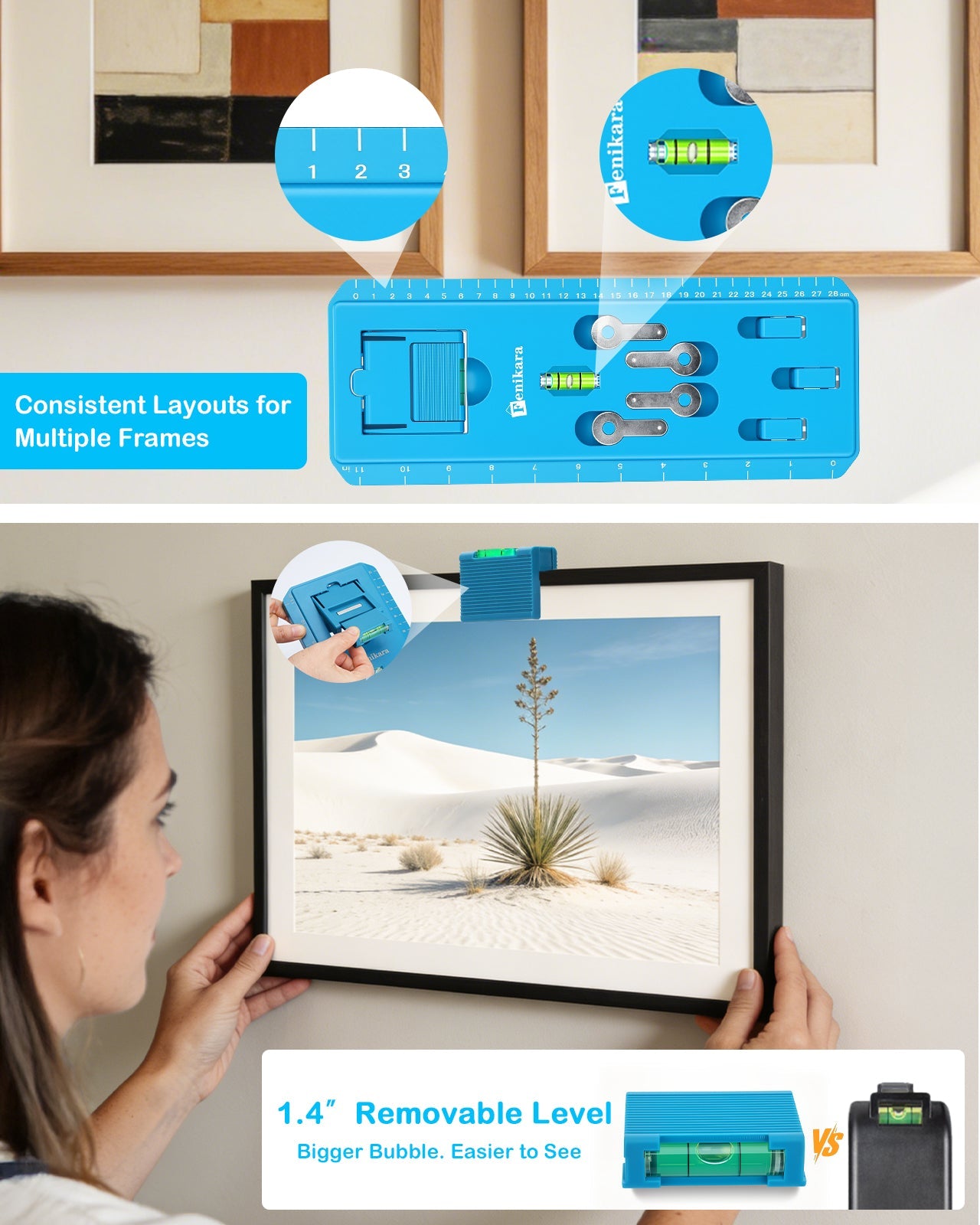
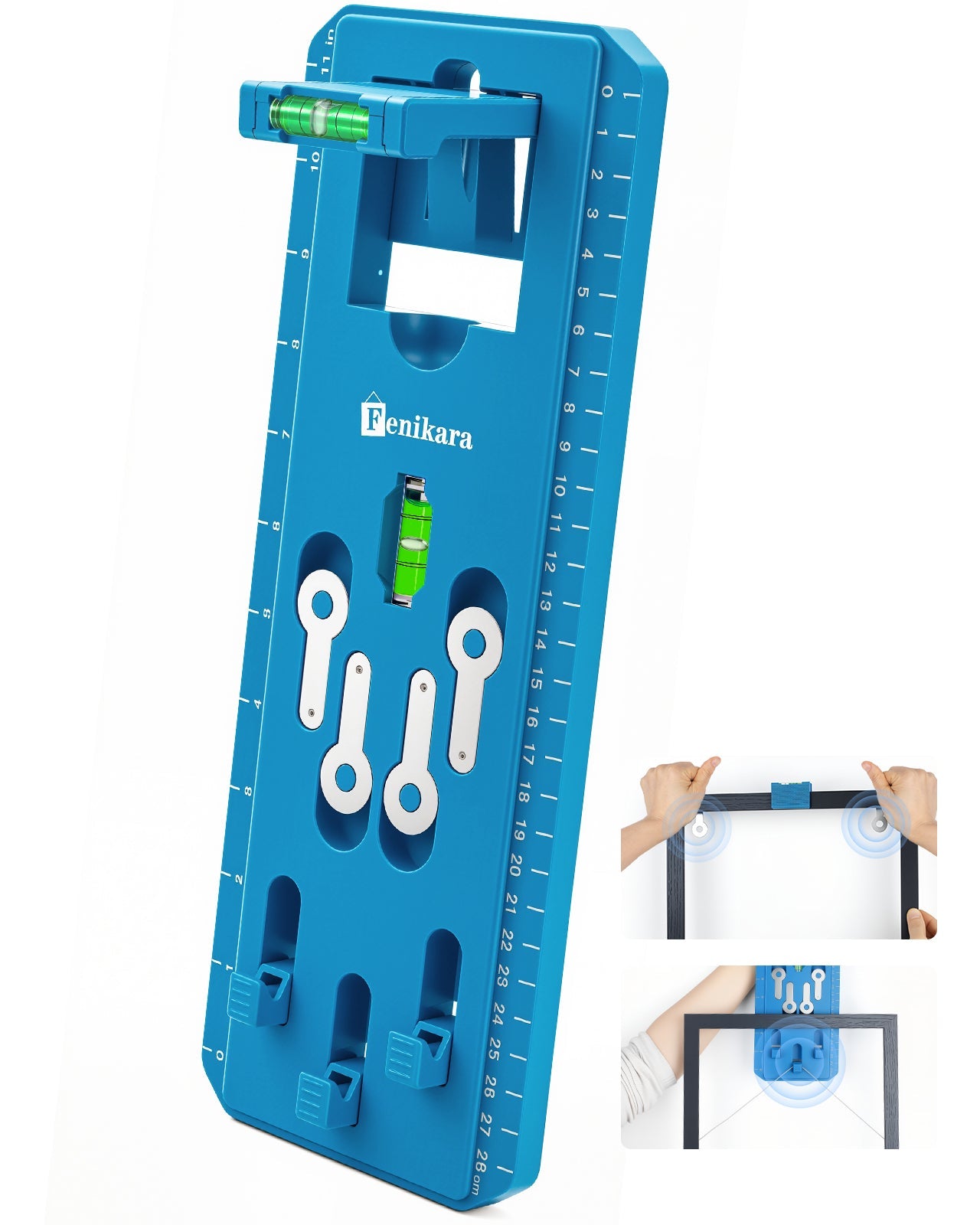
Using a positioning-based picture hanging kit makes this step faster and more accurate because it transfers the exact hanging point directly to the wall.
Step 3: Choose the right support type
Use this quick guide:
- 10–20 lbs → standard picture hooks
- 20–50 lbs → heavy-duty hooks or anchors
- 50+ lbs → wall studs or anchors
Wrong hardware is one of the main reasons frames fall.
Step 4: Install once and test
After marking:
- install the hook
- hang the frame
- apply slight downward pressure
If the marking was correct, no adjustment is needed.
How to Avoid Wall Damage (What Actually Causes It)
Wall damage usually comes from repetition, not the first hole.
Common causes:
- re-measuring and drilling multiple times
- incorrect placement adjustments
- using weak support that fails
The goal is simple:
👉 get the position right before installation
That alone prevents most damage.
Command Strips vs Hooks for Heavy Wall Art
Be clear about this:
- Command strips → good for light, temporary decor
- Hooks and anchors → required for heavy wall art
Even if strips claim high weight capacity, real-world factors like:
- wall texture
- humidity
- time
can reduce reliability.
For anything heavy, mechanical support is the safer option.
Common Mistakes to Avoid
- Measuring from the frame instead of the hanging point
- Installing before marking
- Using strips for heavy items
- Adjusting after drilling
- Ignoring weight limits
Each of these leads to either misalignment or wall damage.
FAQ
What is the safest way to hang heavy wall art?
Use proper hooks or anchors and mark the exact hanging point before installation.
Do command strips work for heavy frames?
They may hold temporarily, but they are not reliable for long-term heavy wall decor.
How do I avoid multiple holes in the wall?
Mark the correct position first and install only once.
Do I need wall anchors for drywall?
Yes, if the frame is heavy or not mounted on a stud.
What causes frames to fall off the wall?
Incorrect hardware, poor placement, or exceeding weight limits.
Final Thoughts
Hanging heavy wall art safely comes down to two things: accurate positioning and proper support.
If you get those right, you won’t need to redo the work—or repair your wall later.