Why Does Bread Crack on Top?
Bread usually cracks on top because pressure builds inside the dough during baking. If the dough cannot expand in a controlled way, the crust breaks open wherever it is weakest.
This commonly happens because of:
- improper scoring
- underproofed dough
- low oven steam
- tight crust formation
Is Cracking Bread Always Bad?
Not always.
Some cracks are natural during baking. In artisan bread, controlled cracking can even improve appearance.
However, large random cracks usually mean the dough expanded unevenly.
What Causes Bread to Crack During Baking?
Several things can cause bread to crack unexpectedly.
1. Not Scoring the Dough Properly
Scoring helps direct expansion.
Without proper scoring:
- steam builds inside the loaf
- pressure has nowhere to escape
- the crust breaks randomly
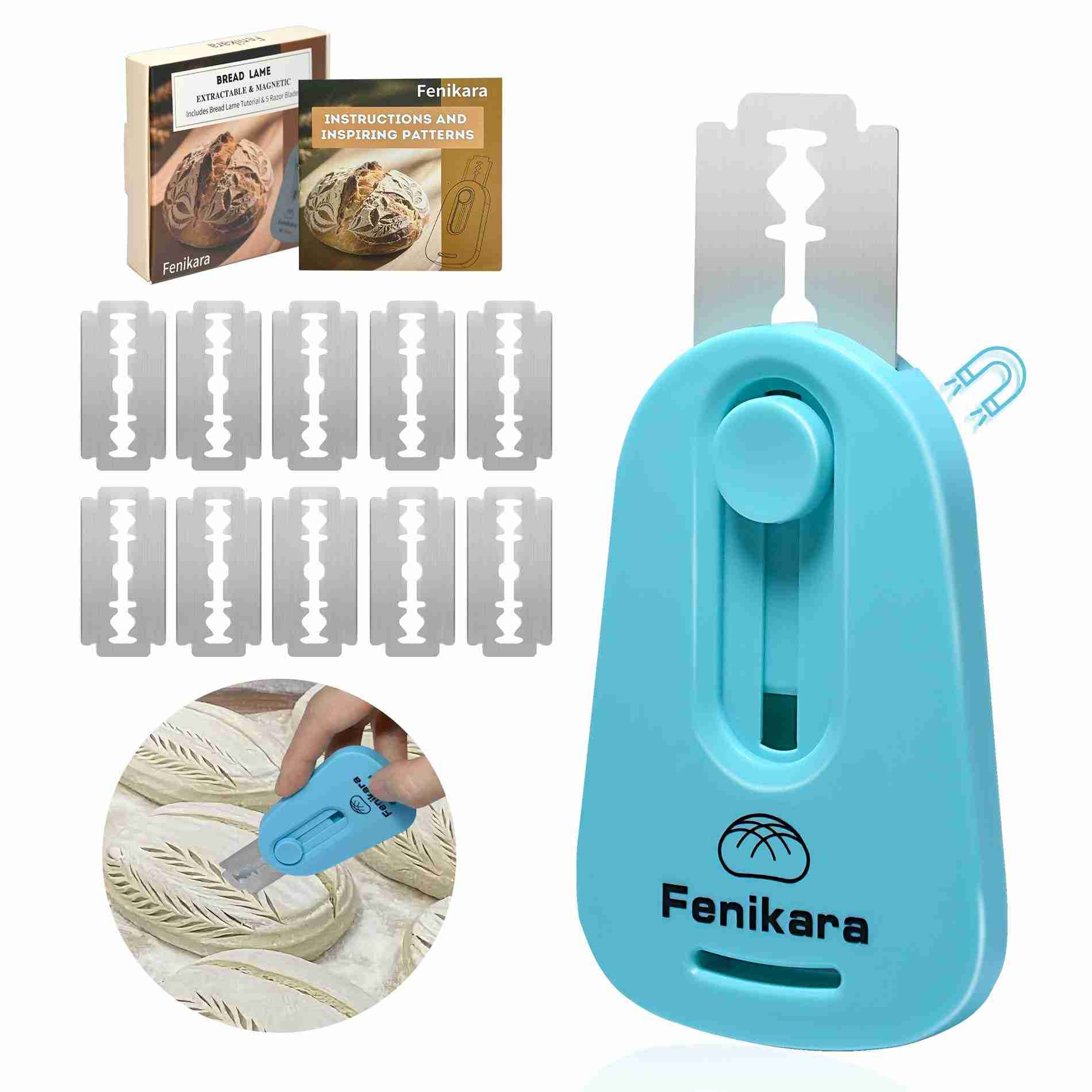
Using a bread lame helps create cleaner expansion lines.
2. Dough Is Underproofed
Underproofed dough still has strong internal pressure.
When baked:
- the dough rises too aggressively
- the crust tears suddenly
- cracks become uneven
This is one of the most common causes.
3. Oven Lacks Steam
Steam keeps the crust flexible during early baking.
Without enough steam:
- crust hardens too quickly
- bread cannot expand smoothly
- surface cracking increases
4. Cuts Are Too Shallow
Shallow scoring may close during baking.
As pressure increases:
- the dough finds another weak spot
- random cracks appear elsewhere
5. Dough Surface Is Too Dry
Dry dough develops a stiff outer layer.
This makes expansion harder and increases tearing during oven spring.
How Does Scoring Help Prevent Cracks?
Scoring creates controlled weak points in the dough.
This allows the bread to:
- expand evenly
- rise more predictably
- reduce random crust splitting
A bread scoring lame makes this process easier and more precise.
Can Overproofed Dough Crack Too?
Yes, but differently.
Overproofed dough usually:
- spreads more
- lacks strong oven spring
- may collapse instead of tearing dramatically
The cracks are often flatter and less controlled.
Why Does Sourdough Crack More Easily?
Sourdough bread often has:
- stronger oven spring
- thicker crust
- higher hydration
These factors increase internal pressure during baking, making scoring more important.
How to Prevent Bread From Cracking on Top
Use Proper Scoring
Score the dough right before baking.
Proof the Dough Correctly
Avoid baking underproofed dough.
Add Steam During Baking
Steam helps keep the crust flexible.
Use a Sharp Blade
Clean cuts help control expansion better.
Avoid Dry Dough Surface
Cover dough properly while proofing.
Can a Bread Lame Improve Bread Cracking?
Indirectly, yes.
A bread lame knife helps create:
- cleaner scoring lines
- better expansion control
- more even crust opening
This reduces random cracking during baking.
Quick Answer (For Google Snippet)
Bread cracks on top when pressure builds inside the dough during baking and the crust cannot expand evenly. Common causes include improper scoring, underproofing, and lack of steam in the oven.
Final Thoughts
Bread cracking is usually a sign of expansion pressure.
Most random cracks can be improved by focusing on:
- proper scoring
- correct proofing
- good oven steam
- dough surface condition
Small adjustments often make a noticeable difference in final bread appearance.