Introduction
Most wall art installation problems come from small mistakes made before the frame even touches the wall.
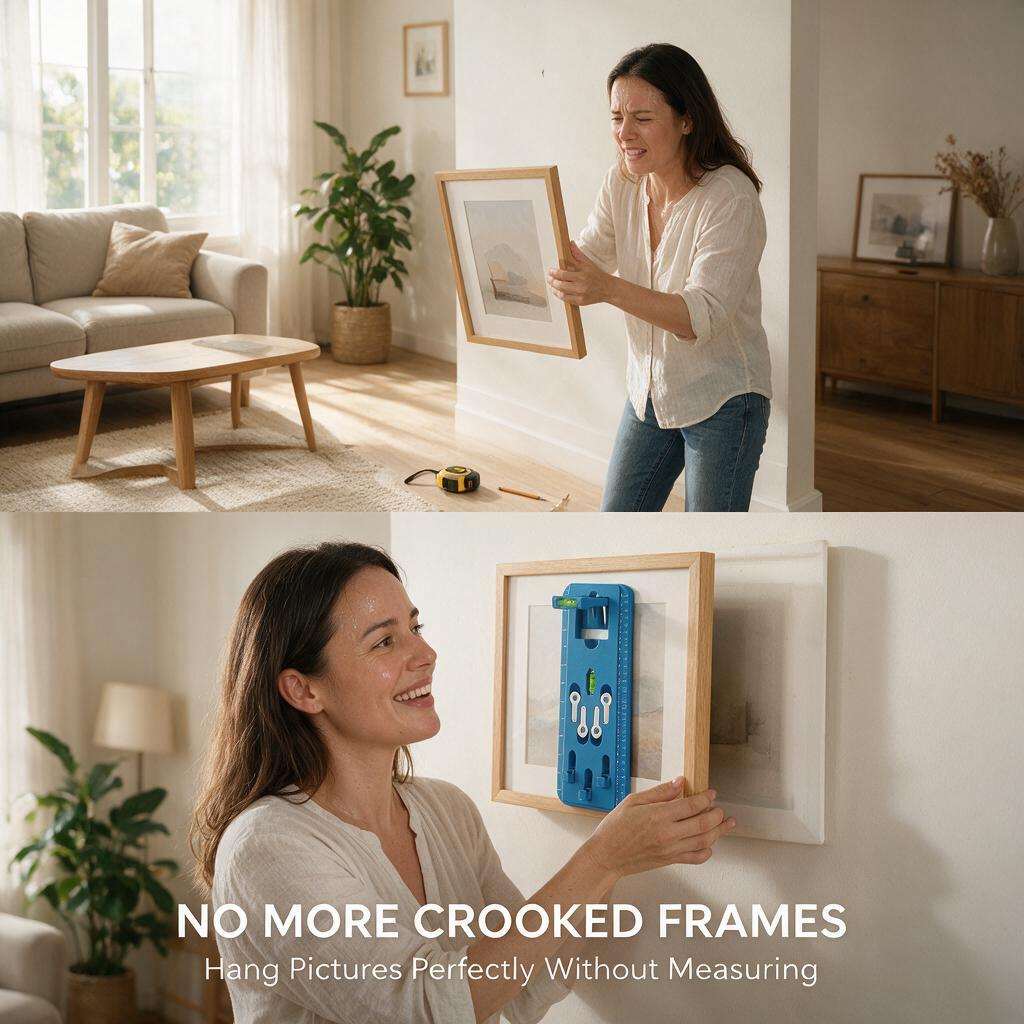
Crooked alignment, uneven spacing, extra holes, and unstable frames usually happen because people rush the setup process or rely too much on measuring manually.
Here are the most common mistakes people make when hanging wall art—and the easiest ways to avoid them.
Mistake #1: Eyeballing the Placement
This is the fastest way to end up with crooked frames.
What looks straight up close often looks uneven from across the room.
Instead:
- mark the exact hanging point
- step back before installing
- check alignment from eye level
Small positioning errors become very noticeable once the frame is on the wall.
Mistake #2: Measuring From the Frame Edge
The top or side of the frame does not matter.
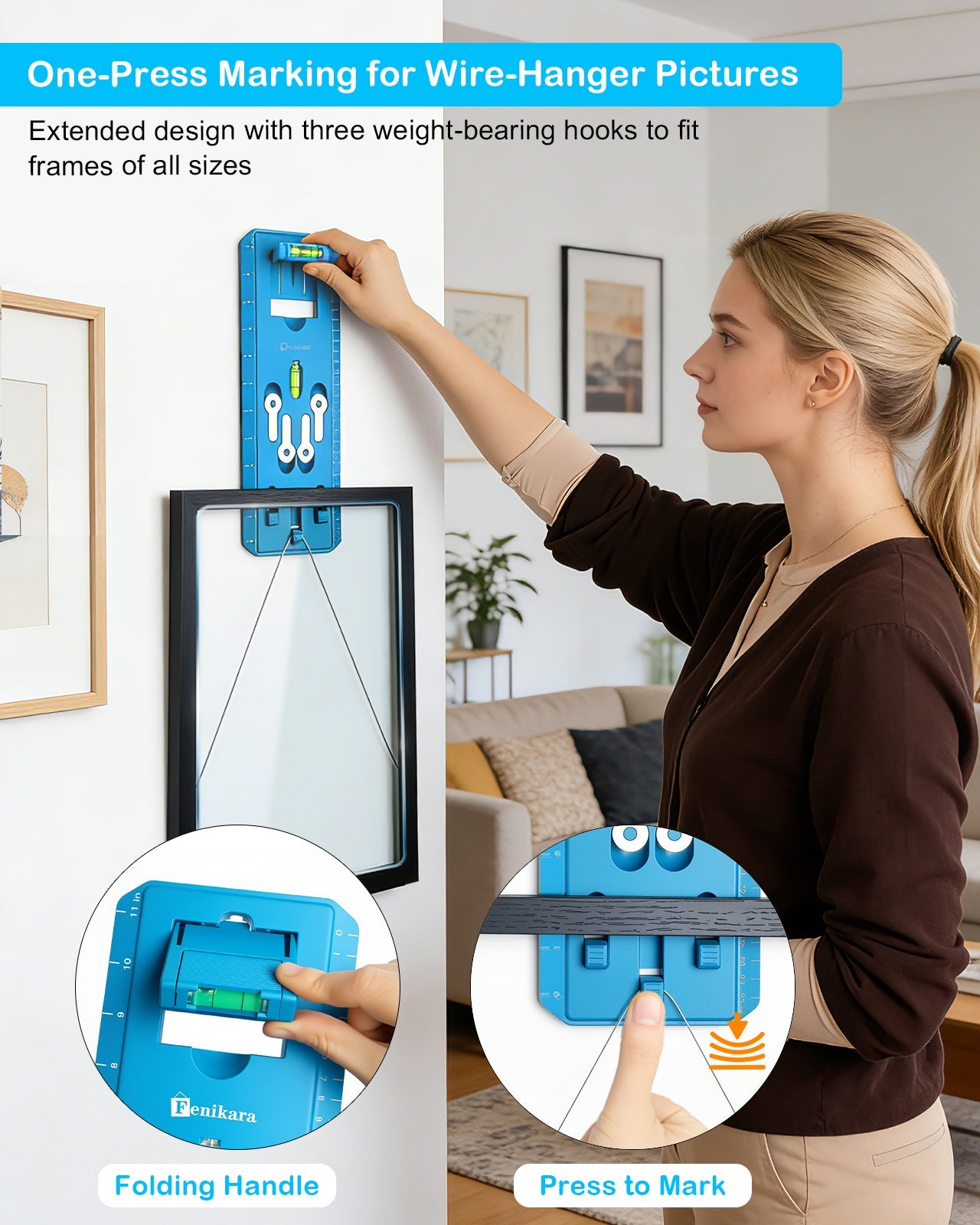
The only point that matters is where the frame actually hangs.
People often measure the outer frame dimensions instead of:
- the hook
- hanging wire
- bracket position
That creates inaccurate placement immediately.
Mistake #3: Hanging Frames One at a Time
This usually causes uneven spacing.
Instead of completing one frame before planning the next:
- map out the full layout first
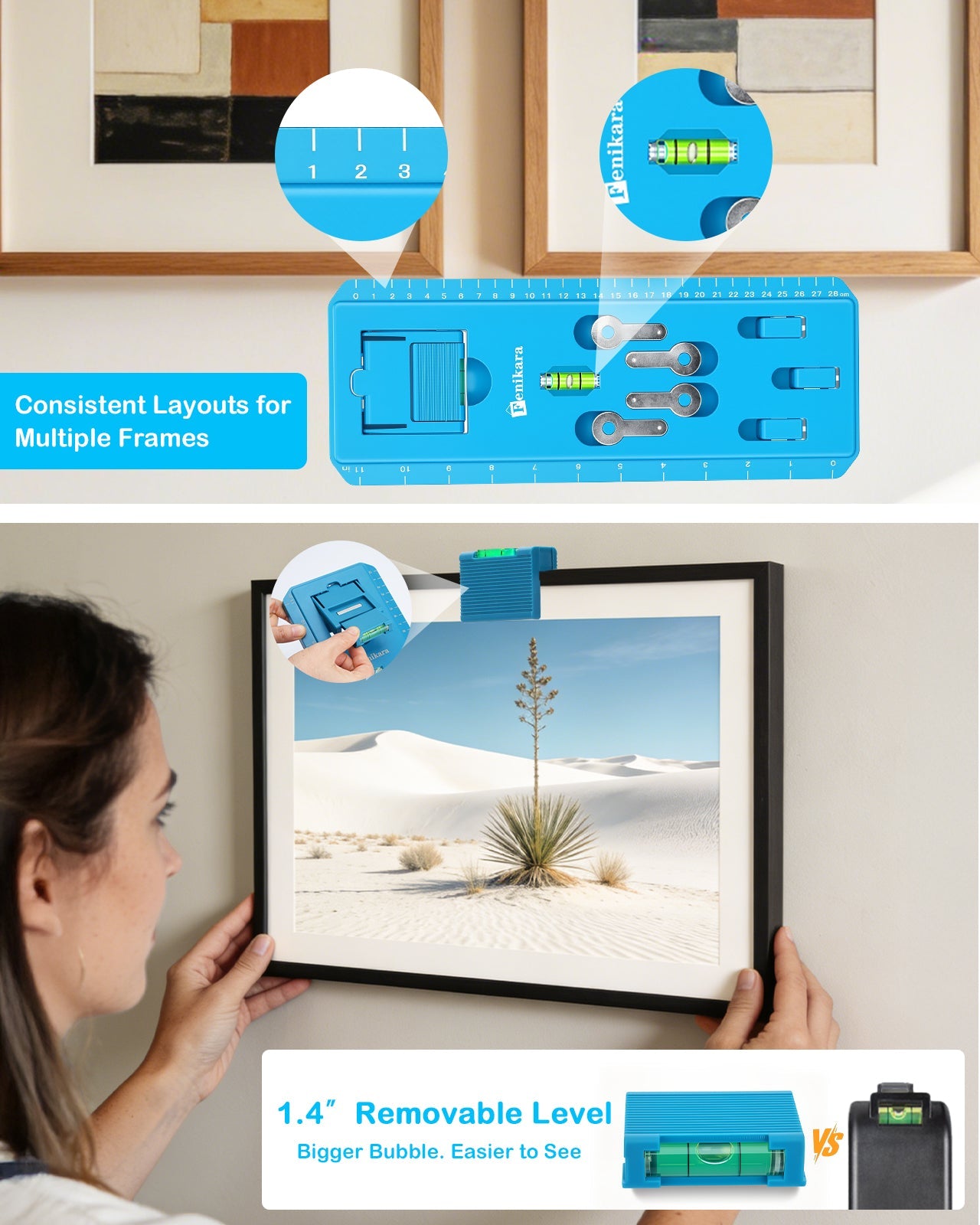
- keep spacing consistent
- install after all positions are marked
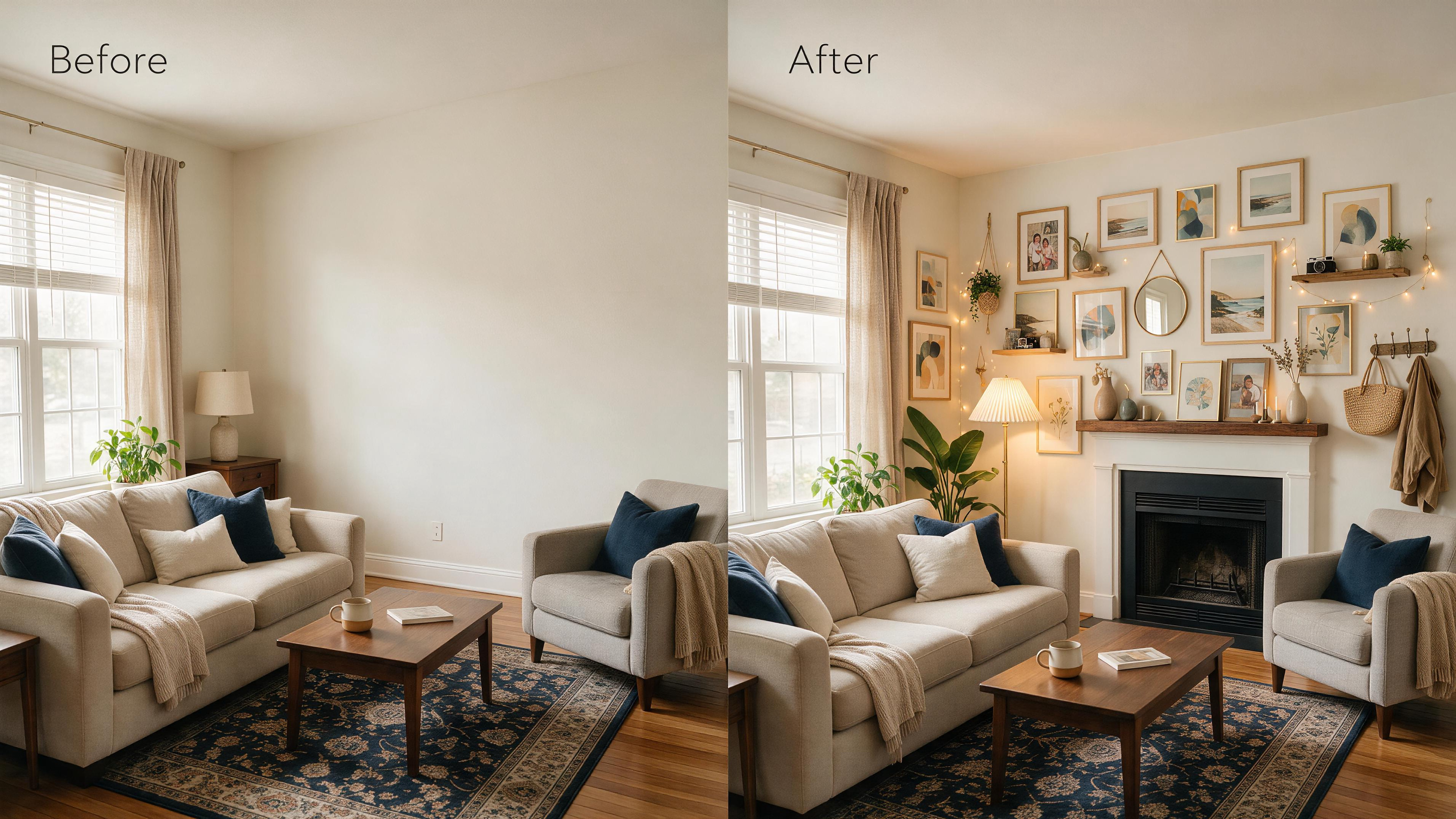
This is especially important for gallery walls.
Mistake #4: Using Command Strips for Heavy Frames
Command strips picture hanging works well for lightweight decor.
They are not ideal for:
- large wall art
- heavy frames
- long-term support
Weight, humidity, and wall texture can reduce reliability over time.
For heavier pieces, hooks or anchors are safer.
Mistake #5: Drilling Before Confirming Placement
Many people install first and adjust later.
That leads to:
- extra holes
- wall patching
- repeated measuring
The better approach is simple:
👉 mark first, install second.
A positioning-based picture hanging kit helps reduce this problem because it transfers the hanging point directly to the wall.
Mistake #6: Inconsistent Frame Spacing
Even if every frame is straight, inconsistent spacing makes the wall look messy.
A simple rule works best:
- keep spacing between 2–3 inches
- maintain the same spacing across the layout
Consistency matters more than exact measurements.
Mistake #7: Ignoring Frame Weight
Different wall decor needs different support.
Lightweight frames and heavy wall art should not use the same hardware.
Quick guide:
| Frame Weight | Recommended Support |
|---|---|
| Under 10 lbs | Small hooks or strips |
| 10–25 lbs | Standard picture hooks |
| 25+ lbs | Heavy-duty hooks or anchors |
Using the wrong hardware is one of the main reasons frames fall.
The Easiest Way to Avoid Most Problems
Most mistakes happen because people rely too heavily on:
- manual measuring
- visual guessing
- repeated adjustments
The cleaner approach is:
- position first
- mark accurately
- install once
That reduces both alignment problems and wall damage.
Practical Tips That Actually Help
- Plan the full layout before hanging anything
- Use the actual hanging point for placement
- Step back frequently to check alignment
- Keep spacing visually consistent
- Avoid making adjustments after drilling
These small habits make wall art installations look much cleaner.
FAQ
What is the biggest mistake when hanging wall art?
Incorrect placement marking is the most common issue because it causes crooked alignment and repeated drilling.
Why do gallery walls look uneven?
Usually because spacing changes between frames or the layout was not planned beforehand.
Are command strips reliable for heavy wall art?
Not for long-term support. Hooks or anchors work better for heavier frames.
How do I avoid extra holes in the wall?
Mark all positions before installing anything.
What’s the easiest way to keep frames straight?
Transfer the exact hanging point directly to the wall instead of estimating placement visually.
Final Thoughts
Most wall art mistakes happen before installation—not after.
Accurate positioning, consistent spacing, and proper support make the biggest difference. Once those are correct, the rest of the process becomes much easier.