What Is the Best Bread Lame for Sourdough?
The best bread lame for sourdough is one that allows you to score dough quickly, cleanly, and with good control. A sharp blade, comfortable handle, and secure blade holder all help create smooth cuts that guide oven spring. When scoring is done well, sourdough loaves expand evenly in the oven and develop the signature crust and ear that artisan bread is known for.
But not all bread lames feel the same in practice. The right choice often depends on your baking style, dough hydration, and how detailed your scoring patterns are.
What Is a Bread Lame?
A bread lame is a small tool used to hold a razor blade for scoring bread dough before baking. Bakers use it to make shallow cuts in the dough’s surface so the loaf can expand in a controlled way in the oven.
You may also hear it called:
-
bread scoring lame
-
bread lame knife
-
lame bread tool
-
sourdough bread lame
-
scoring lame for bread
Although the tool itself is simple, it plays an important role in shaping the final look and texture of the bread.
Why Sourdough Bakers Use a Bread Lame
When sourdough enters a hot oven, fermentation gases and steam expand quickly. If the dough surface is not scored properly, pressure builds and the loaf may split in random places.
Using a bread lame helps by:
-
guiding where the loaf opens
-
improving oven spring
-
preventing uncontrolled cracks
-
creating better crust structure
-
allowing decorative scoring patterns
For sourdough in particular, scoring is almost essential because of the dough’s strong gluten structure and high fermentation activity.
Features of the Best Bread Lame for Sourdough
When choosing a bread lame, small design details can make scoring easier or more difficult. Here are the most important features to consider.
Blade Sharpness
The blade must be extremely sharp to slice cleanly through soft dough.
A dull blade will:
-
drag the dough surface
-
create jagged cuts
-
collapse delicate patterns
Most bakers use standard double-edge razor blades because they are thin and easy to replace.
Handle Comfort and Control
The handle should feel natural in your hand. Good control helps you make quick, confident scoring motions.
Important handle features include:
-
balanced weight
-
comfortable grip
-
stable blade alignment
If the tool feels awkward, scoring becomes slower and less precise.
Blade Replacement System
Bread lames usually hold blades in one of three ways.
Wire holder
-
simple design
-
lightweight
-
common in artisan bakeries
Screw holder
-
more secure blade attachment
-
slightly heavier
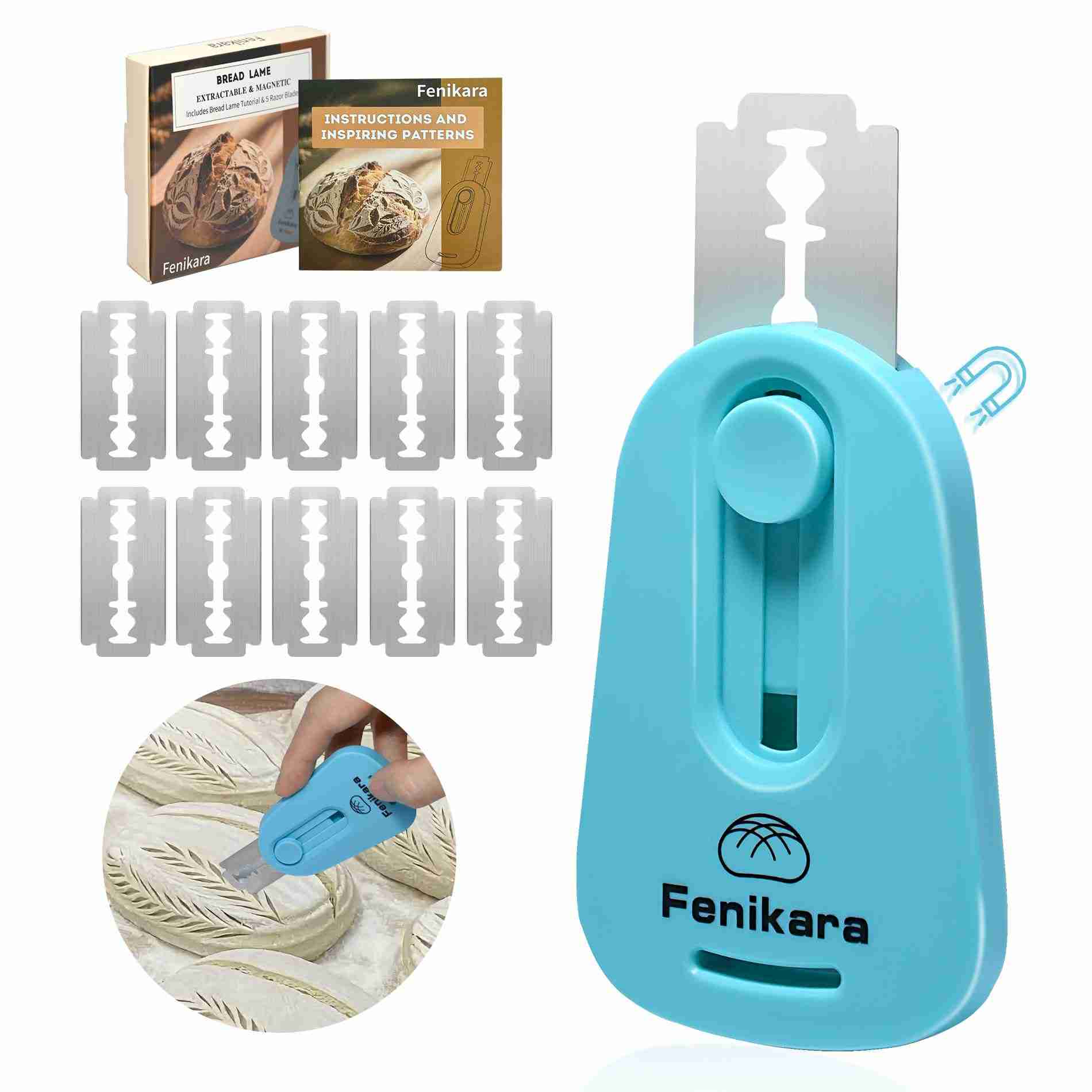
Magnetic holder
-
fast blade replacement
-
simple blade alignment
Each system works well as long as the blade remains stable during scoring.
Straight vs Curved Bread Lame
One of the most common questions among sourdough bakers is whether a straight or curved bread lame works better.
Straight Bread Lame
Straight lames hold the blade flat.
They are great for:
-
basic scoring
-
beginners learning technique
-
direct expansion cuts
Straight lames provide clean lines and simple control.
Curved Bread Lame
Curved lames slightly bend the blade, which naturally creates an angled cut.
This helps produce the famous sourdough ear — the raised crust ridge that forms along the scoring line.
Curved lames are often preferred by bakers who enjoy decorative scoring or artisan-style loaves.
How to Use a Bread Lame on Sourdough Dough
Even the best bread lame works best when used correctly. Scoring technique plays a big role in the final bread shape.
Step 1: Score Cold Dough
Cold dough from the refrigerator is easier to cut. The surface is firmer and less sticky.
Many sourdough bakers proof their dough overnight and score it straight from the fridge.
Step 2: Hold the Blade at an Angle
For different results:
-
90° angle creates a simple opening
-
30–45° angle helps produce a sourdough ear
The angle controls how the crust lifts during baking.
Step 3: Cut With One Quick Motion
Try to make the cut in a single confident movement.
Avoid:
-
slow sawing
-
repeated slicing
-
heavy pressure
The blade should glide through the dough.
Step 4: Cut to the Right Depth
Most sourdough loaves need a scoring depth of about ¼ to ½ inch.
Shallow cuts may close during baking, while deep cuts can weaken the loaf structure.
Popular Bread Scoring Styles
Scoring patterns can be both functional and decorative. Once you get comfortable with basic cuts, you can experiment with designs.
Basic Expansion Cut
A single long slash across the loaf helps control oven spring.
This is the most common scoring style.
Cross Pattern
Two intersecting cuts allow the loaf to expand in multiple directions. This pattern is simple and beginner-friendly.
Decorative Sourdough Designs
Experienced bakers often add artistic scoring patterns such as:
-
leaves
-
wheat designs
-
geometric shapes
These patterns are usually shallow and paired with a deeper structural cut.
Common Scoring Problems and How to Fix Them
Even experienced bakers occasionally struggle with scoring results. Here are some common issues.
The Cut Doesn’t Open
Possible reasons:
-
dough is overproofed
-
cut is too shallow
-
blade is dull
The Dough Tears Instead of Cutting
This usually happens when:
-
the blade drags
-
the dough is too warm
-
the scoring motion is too slow
Using a sharper blade and colder dough usually fixes the problem.
Random Cracks in the Crust
If the loaf bursts in unexpected places, the scoring pattern may not be deep enough to release internal pressure.
Adding a stronger main cut often helps.
Bread Lame Care and Blade Safety
Because bread lames use razor blades, safe handling is important.
Helpful safety habits include:
-
holding the blade by the dull edges
-
replacing blades regularly
-
storing the lame safely when not in use
-
disposing of used blades carefully
Sharp blades actually improve safety because they require less force during scoring.
Final Thoughts on Choosing the Best Bread Lame for Sourdough
The best bread lame for sourdough isn’t necessarily the most complex one. What matters most is how comfortable and confident you feel using it.
A good bread lame should:
-
hold the blade securely
-
feel balanced in your hand
-
allow quick, smooth scoring
With practice, scoring becomes a natural part of the baking process. Over time you’ll learn how different angles, depths, and patterns affect your sourdough loaves.
And once you master your bread lame, you’ll notice your bread opening beautifully in the oven — exactly where you want it to.