Introduction
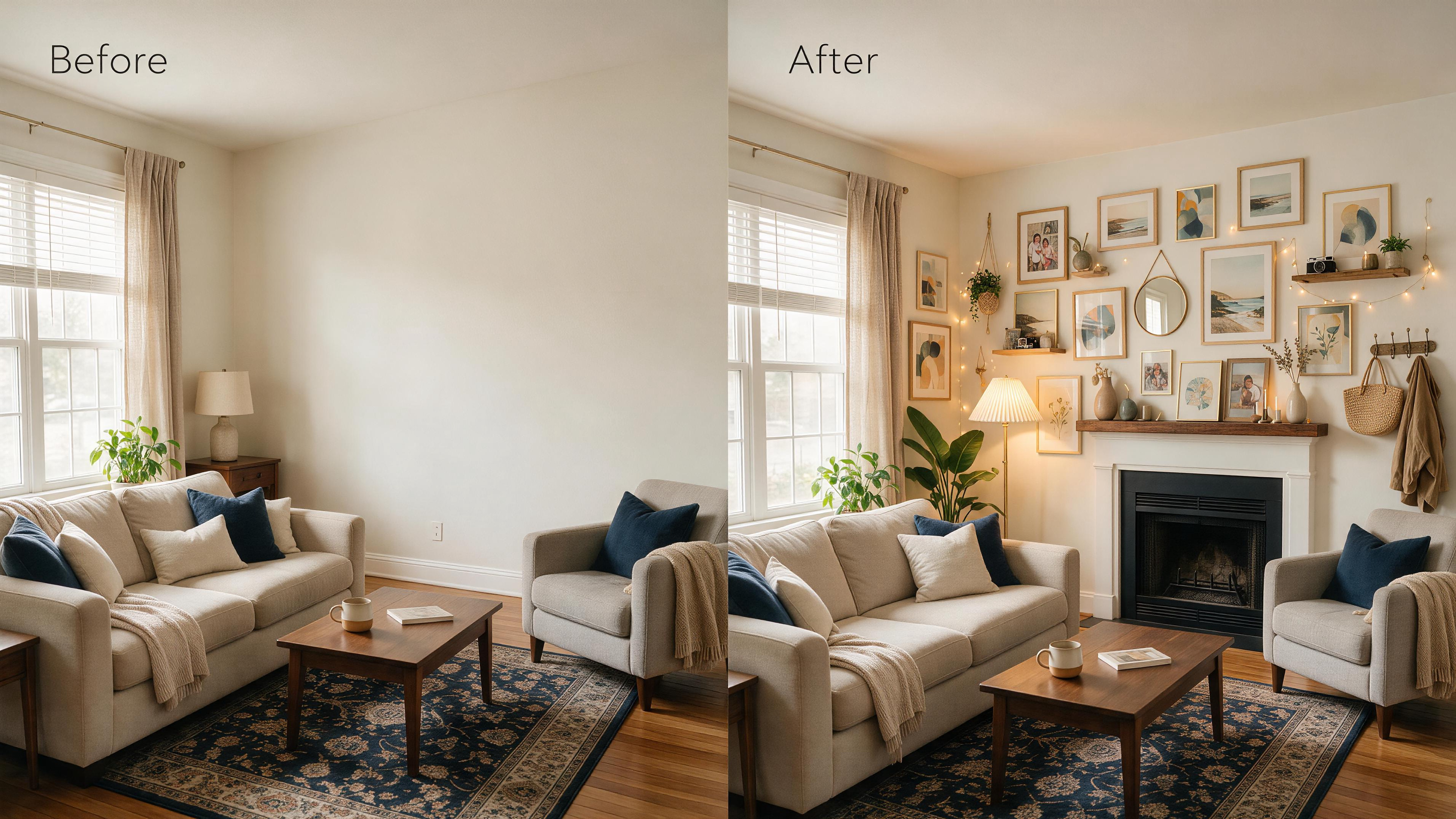
The easiest way to hang multiple frames evenly is to plan the spacing first and transfer the hanging points directly to the wall.
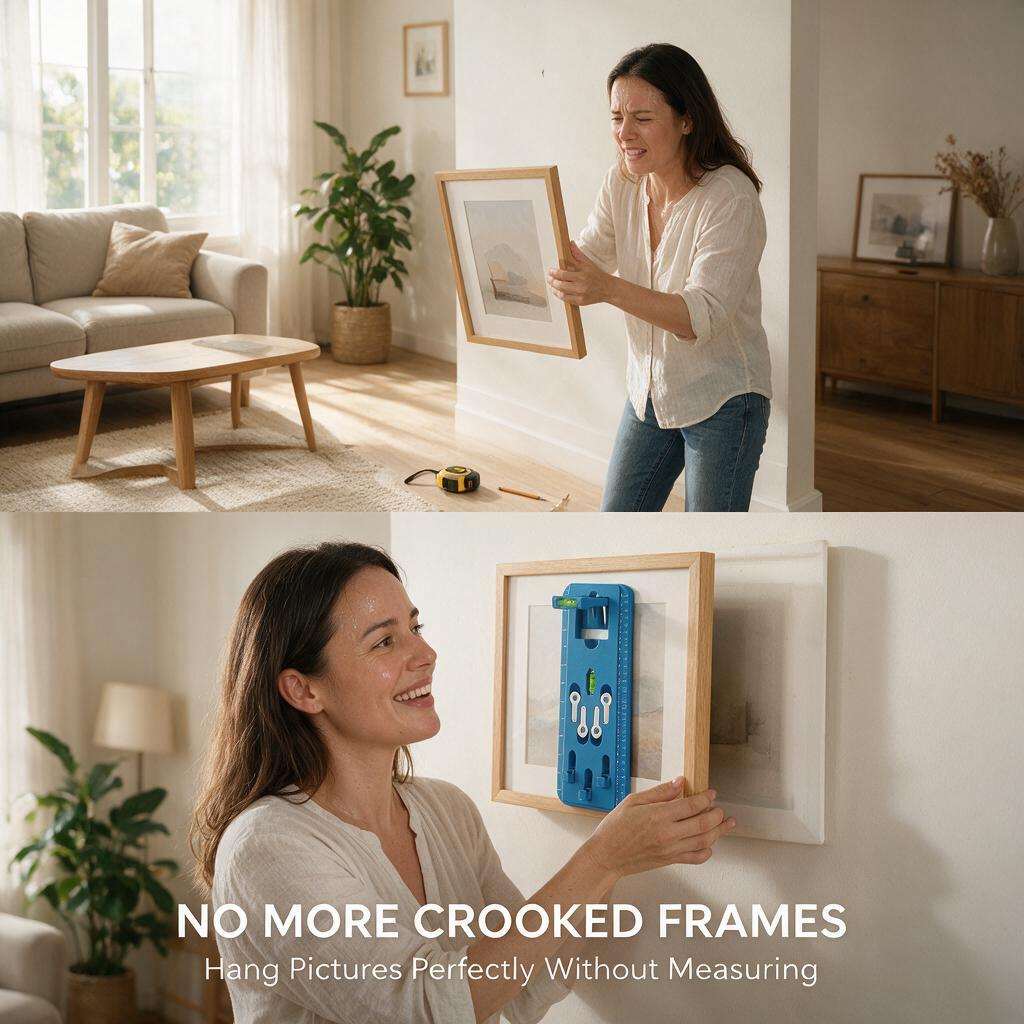
Most uneven gallery walls happen because people measure each frame separately and make small positioning mistakes over and over again.
The good news is that hanging multiple frames doesn’t need to be complicated. With the right setup process, you can keep everything aligned without wasting time.
Why Multiple Frames Are Harder Than One
A single frame is simple.
Multiple frames are different because every small mistake becomes more visible once the layout expands across the wall.
Common problems include:
- uneven spacing
- drifting alignment
- crooked rows
- extra wall holes from adjustments
The larger the gallery wall, the easier it is for those mistakes to stack up.
Start With the Layout First
Before hanging anything:
- place all frames on the floor
- arrange them into the final layout
- take a reference photo
This makes spacing easier to visualize before installation starts.
Most people skip this step and try to figure it out directly on the wall, which usually leads to inconsistent positioning.
Use Consistent Spacing Everywhere
Consistency matters more than exact measurements.
A simple spacing rule works best:
- 2–3 inches between frames
- maintain the same spacing throughout the layout
If spacing changes randomly, the entire wall starts looking uneven—even when every frame is technically level.
Stop Measuring Every Frame Individually
This is where most time gets wasted.
People often:
- measure frame width
- calculate center points
- remeasure gaps repeatedly
That process sounds accurate but usually creates more opportunities for mistakes.
Instead, focus on transferring the actual hanging points directly to the wall.
This keeps spacing more consistent and reduces repeated adjustments.
Why Positioning Matters More Than Leveling
Many people assume the level is the most important tool.
It’s not.
If the original placement is wrong, leveling afterward won’t fix the overall layout.
The real priority is:
- accurate positioning
- equal spacing
- proper alignment planning
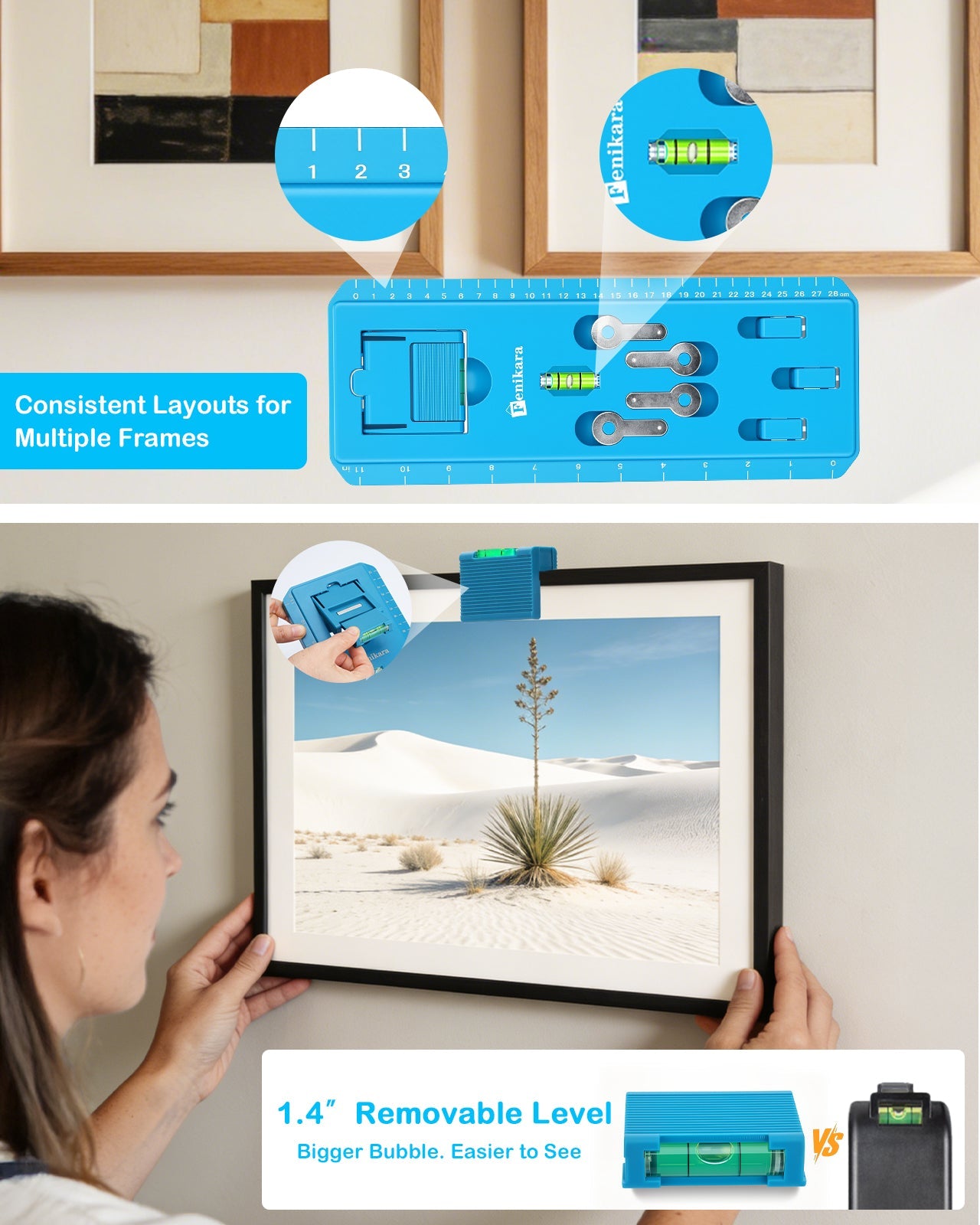
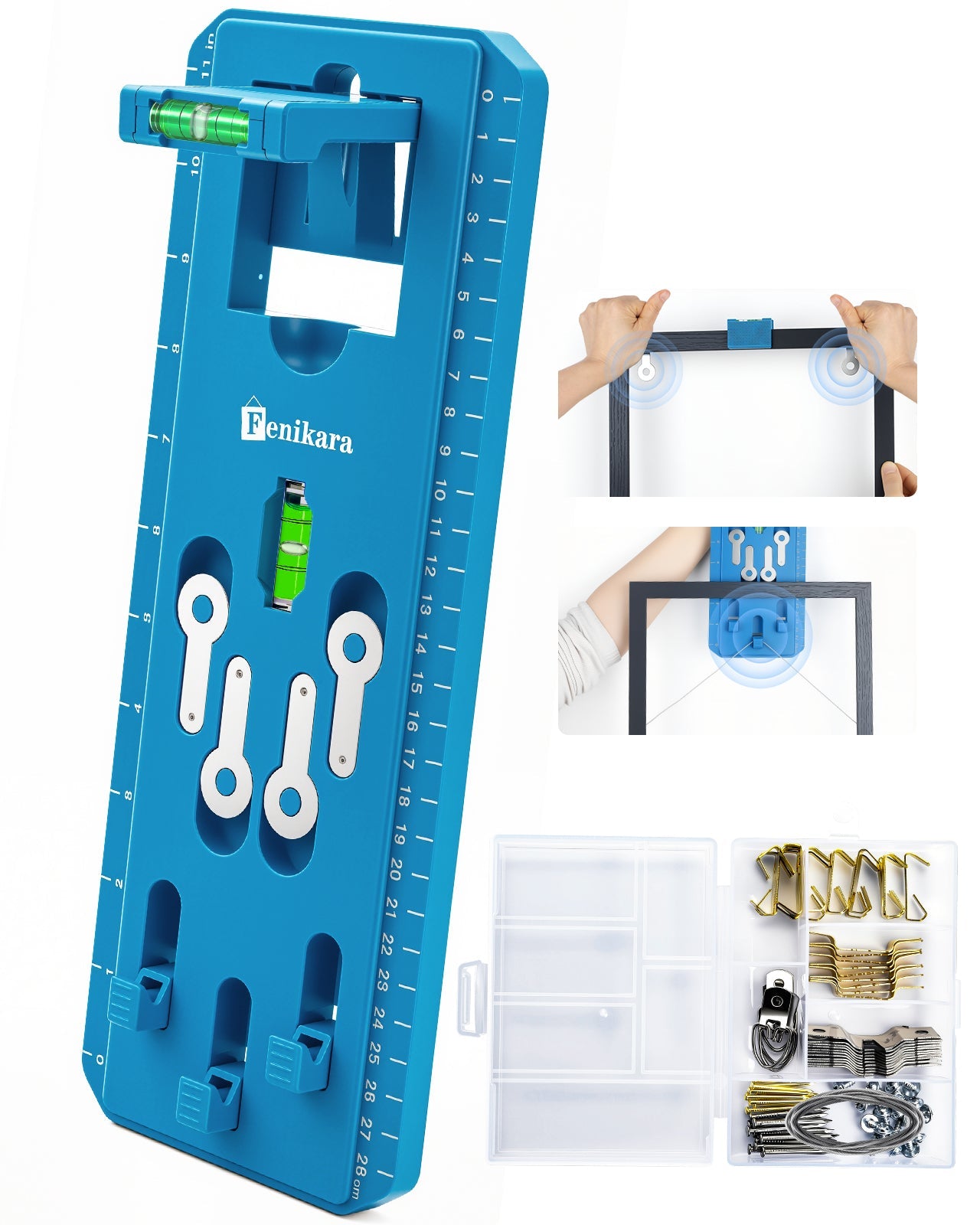
A positioning-based picture hanging kit helps simplify this because it reduces manual measuring during setup.
The Best Order for Hanging Multiple Frames
A cleaner process looks like this:
Step 1: Plan the full layout
Do not hang one frame at a time.
Step 2: Mark all hanging points first
This lets you check alignment before drilling.
Step 3: Start from the center
Working outward keeps spacing more balanced.
Step 4: Install after everything is confirmed
This reduces unnecessary holes and repositioning.
Common Mistakes That Ruin Gallery Walls
Uneven spacing
The most noticeable mistake visually.
Hanging as you go
This causes layout drift across the wall.
Eyeballing placement
Small visual errors become obvious from a distance.
Using lightweight support for large frames
Heavier pieces require stronger support and more accurate placement.
Best Frame Layout Styles
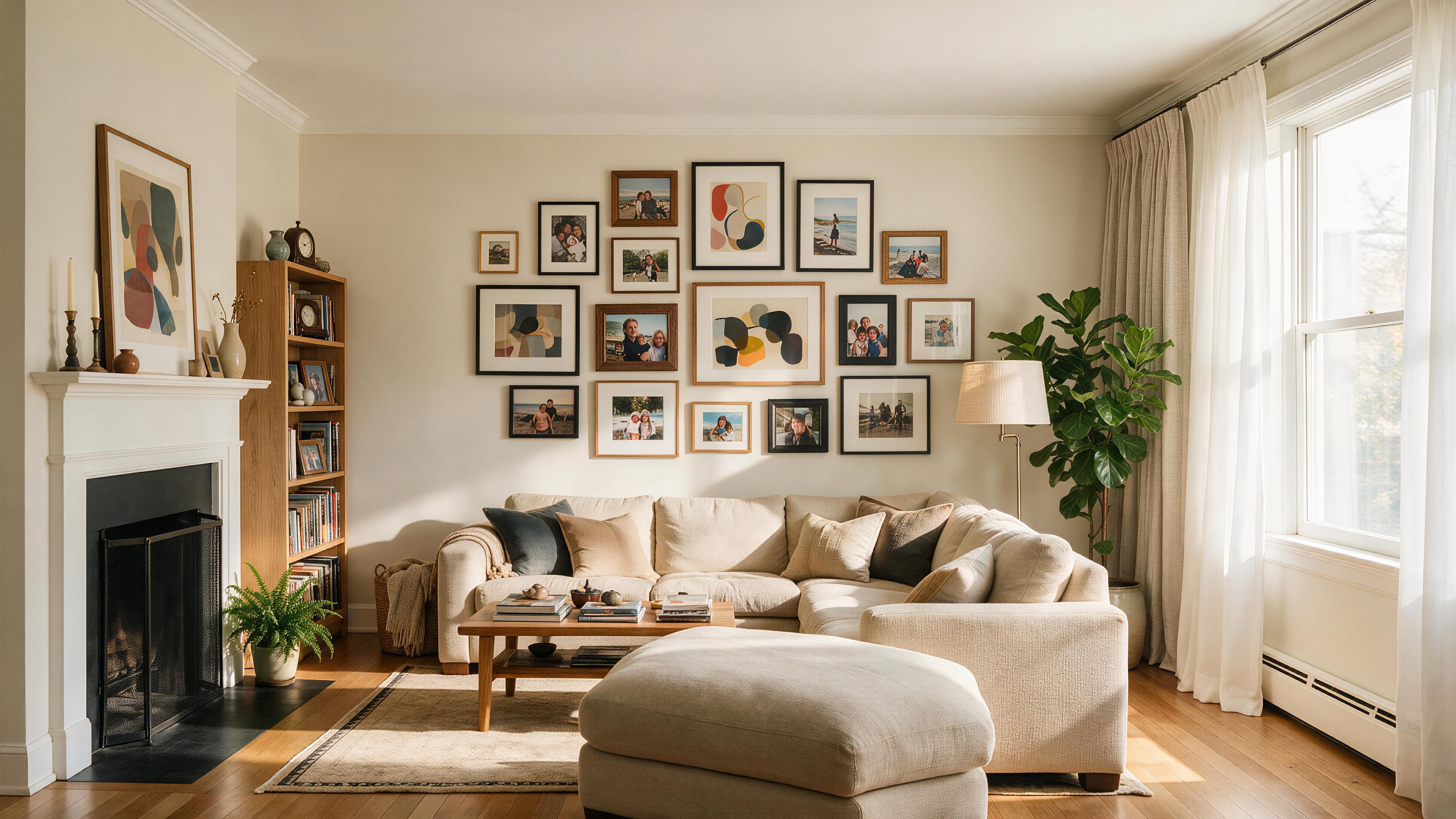
Symmetrical grid
Best for:
- matching frame sizes
- clean modern spaces
Organic layout
Best for:
- mixed frame sizes
- casual home decor styles
Linear layout
Works well above:
- couches
- beds
- desks
Practical Tips That Actually Help
- Take a photo of your planned layout first
- Keep spacing visually consistent
- Step back often while marking
- Mark all positions before installing
- Avoid adjusting after drilling
These small steps prevent most alignment problems.
FAQ
What is the easiest way to hang multiple frames evenly?
Plan the full layout first and transfer the hanging points directly to the wall.
How much space should be between picture frames?
Most gallery walls use 2–3 inches of spacing between frames.
Should I measure every frame placement?
No. Marking the actual hanging points is usually faster and more accurate.
Why do gallery walls look uneven?
Usually because spacing changes across the layout or frames were installed one at a time.
What helps keep frame spacing consistent?
Planning the layout first and using accurate positioning during installation.
Final Thoughts
Hanging multiple frames evenly is less about measuring perfectly and more about keeping positioning consistent from the start.
Once the layout is planned correctly, the entire process becomes faster, cleaner, and much easier to manage.