Still No Ear on Your Sourdough? Here’s Why
You take your bread out of the oven, excited to see that perfect rise… but instead, it’s just a smooth crust with a flat cut. No ear. No lift. Nothing.
If that keeps happening, it’s not because you’re doing everything wrong. In fact, most people are very close—they’re just missing a few small details that make all the difference.
Getting a sourdough ear isn’t about luck. It’s about understanding how scoring, dough, and heat work together.
What Exactly Is a Sourdough Ear?
A sourdough ear is that raised, crispy flap of crust that forms along your score line.
It happens when:
- the dough expands quickly in the oven
- the cut opens in a controlled way
- the top layer lifts and curls slightly
It looks great, but more importantly, it shows that your bread is baking the way it should.
Why Your Bread Isn’t Getting an Ear
Let’s be honest—most people try a few times, don’t get an ear, and assume it’s complicated.
It’s not.
Usually, it comes down to one (or more) of these:
- the scoring angle is off
- the dough isn’t strong enough
- the dough sat too long before baking
- the oven setup isn’t helping
Fix these, and you’ll start seeing results fast.
The Real Secret: It’s All About the Angle
If there’s one thing to fix first, it’s this.
Most beginners score straight down. That creates a split—but not an ear.
What you want instead:
- hold your bread lame at a slight angle (not vertical)
- make a smooth, shallow glide across the surface
Think of it like “lifting a flap,” not just cutting a line.
That small change alone can completely transform your results.
Your Dough Needs Strength (Or It Won’t Lift)
Even with perfect scoring, weak dough won’t give you an ear.
If your loaf spreads instead of rising, that’s your sign.
To improve dough strength:
- build better gluten during mixing
- shape the dough tightly
- create surface tension before proofing
A strong dough pushes upward—that’s what creates the ear.
Timing Matters More Than You Think
This one trips up a lot of people.
If your dough is overproofed, it looks great going in—but won’t rise much in the oven.
No rise = no ear.
Quick check before baking:
- gently press the dough
- if it doesn’t bounce back, it’s probably overproofed
Baking slightly earlier often gives better results.
A Sharp Blade Makes a Huge Difference
This is where tools actually matter.
A dull blade doesn’t slice—it drags.
And when that happens:
- the cut seals back up
- the dough tears unevenly
- the ear won’t form cleanly
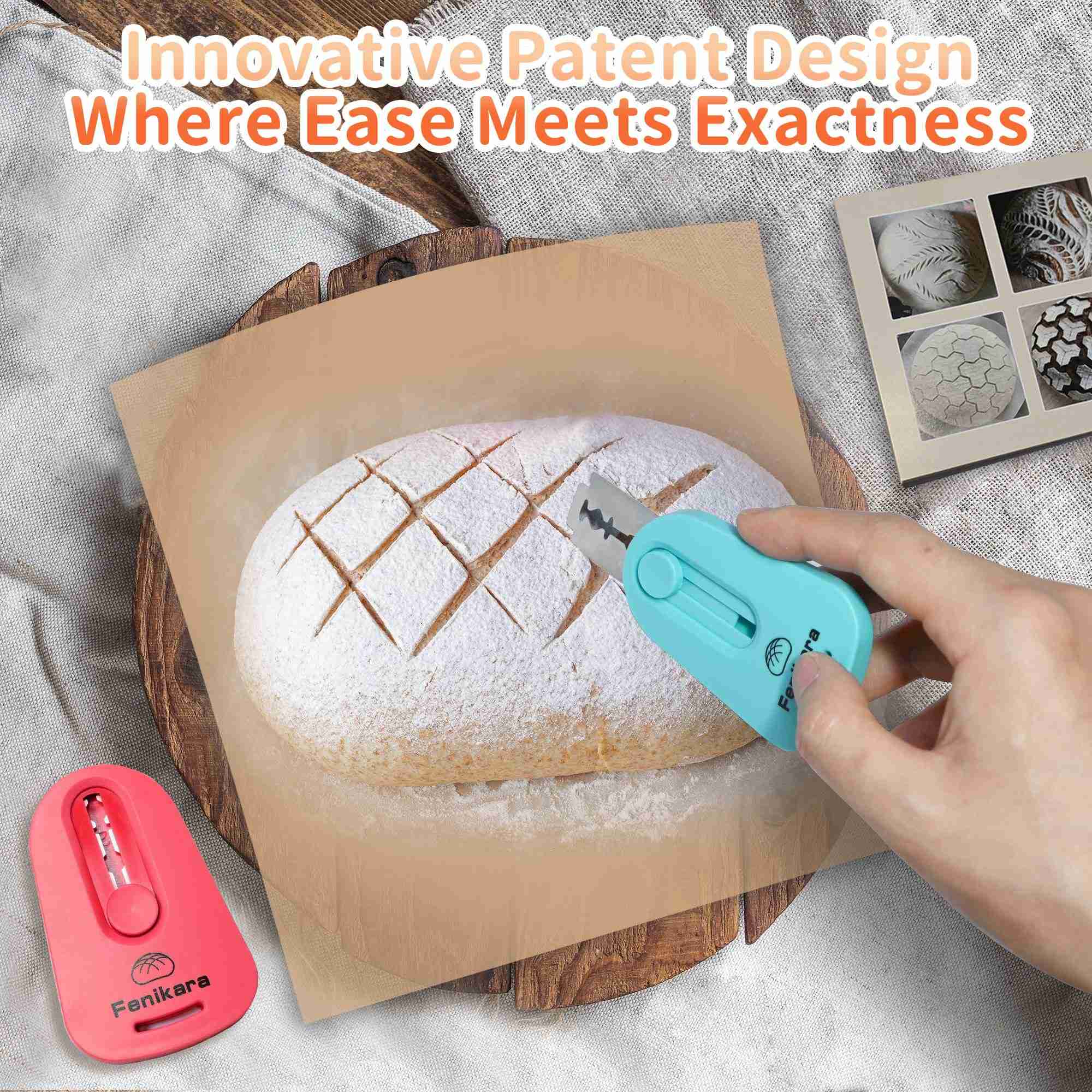
That’s why most bakers switch to a bread scoring lame.
It’s designed to:
- hold a razor blade securely
- create clean, controlled cuts
- make scoring faster and easier
Don’t Skip Steam (It’s Critical)
Steam is one of the most overlooked factors.
Without it:
- the crust hardens too early
- the bread can’t expand properly
- the ear gets blocked
With steam:
- the surface stays soft longer
- the score can open fully
- the ear lifts and crisps up
This is often the difference between “almost” and “perfect.”
A Simple Way to Get Better Results Every Time
If you want something easy to follow, use this:
- Start with slightly cold dough (easier to score)
- Use a sharp bread lame knife
- Score at a shallow angle in one smooth motion
- Bake in a fully preheated, hot oven
- Make sure there’s steam at the beginning
That’s it. No complicated steps.
Common Mistakes (Quick Fix List)
If your ear still isn’t showing up, check these:
- cutting straight down instead of angled
- scoring too lightly
- dough feels too loose or slack
- oven wasn’t hot enough
- no steam added
Even fixing one of these can improve your result.
What a Good Ear Should Look Like
When everything works, you’ll notice:
- a clear, lifted ridge along the cut
- a crispy edge that curls slightly
- a controlled, even expansion
It doesn’t have to be perfect. Even a small ear means you’re on the right track.
Final Thoughts
Getting a sourdough ear isn’t about doing everything perfectly—it’s about getting a few key things right.
Focus on:
- scoring angle
- dough strength
- timing
- oven conditions
Once those line up, the ear becomes something you can repeat—not something you hope for.
And the best part? You’ll start seeing improvement faster than you expect.