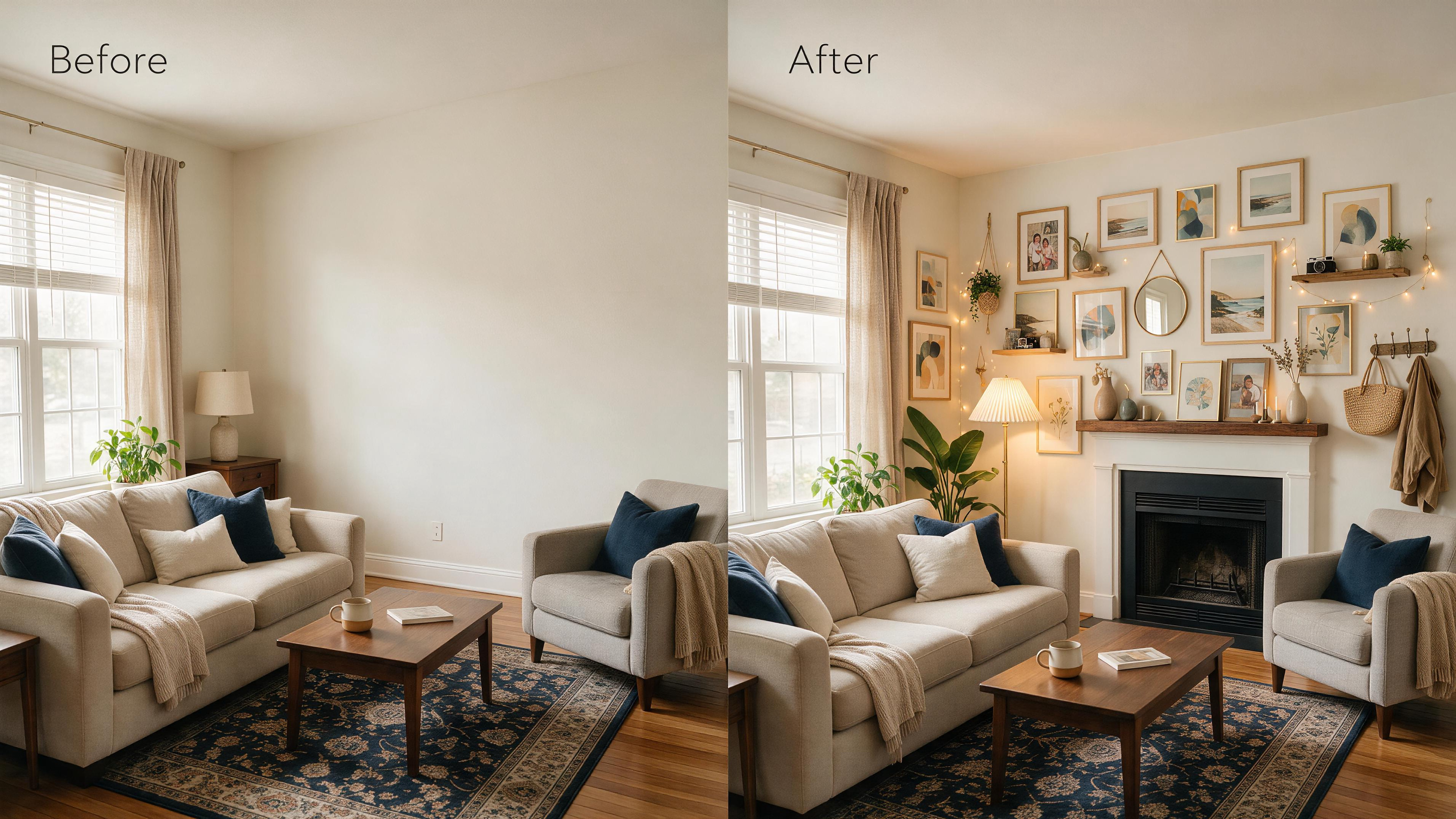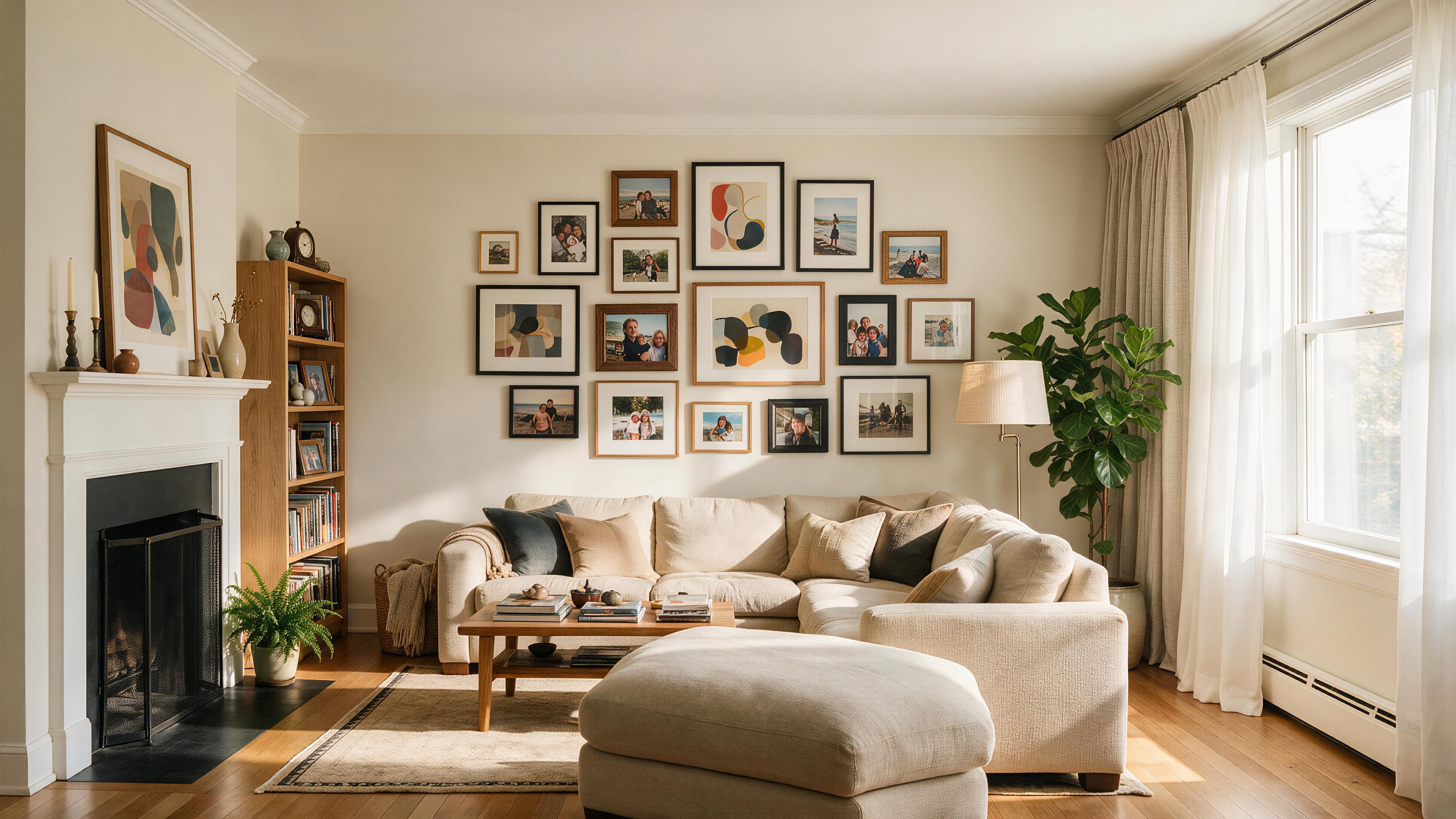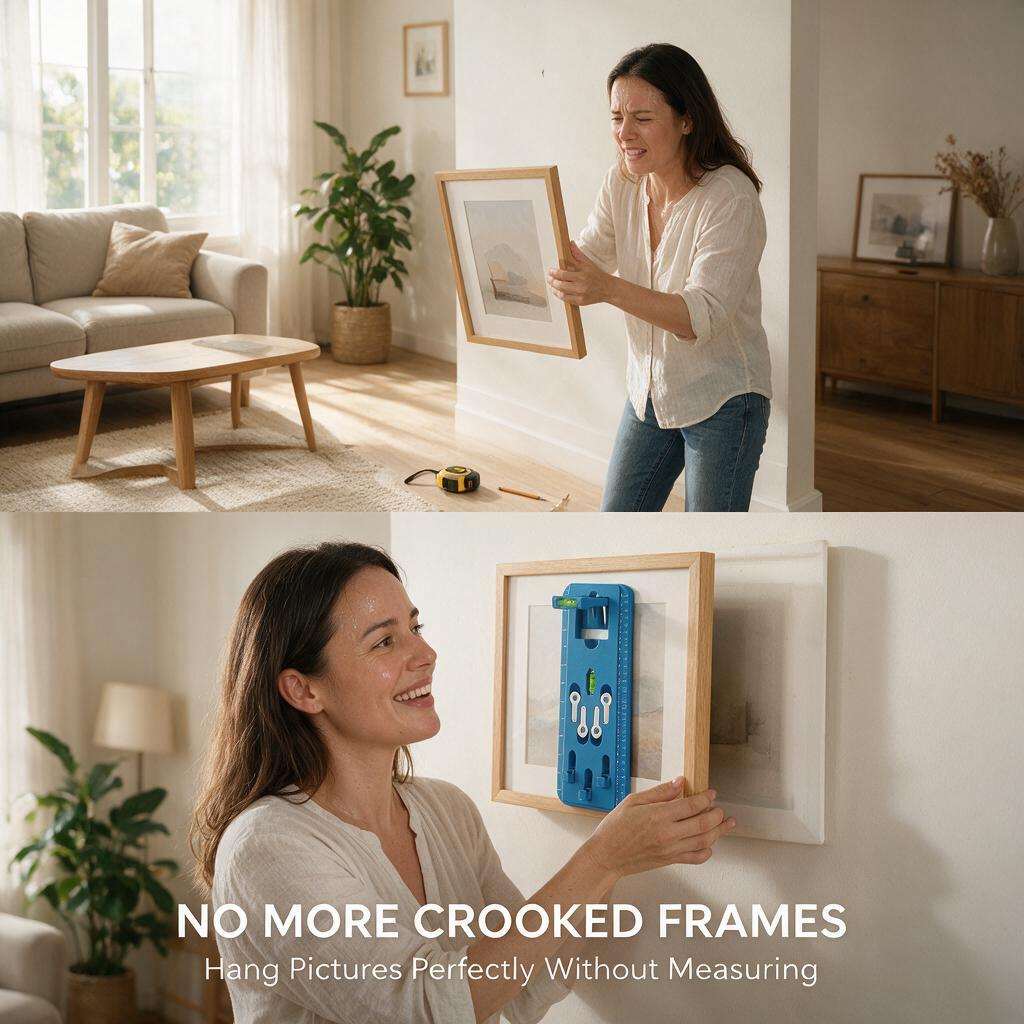
A blank living room wall can make your space feel unfinished. Adding a gallery wall is one of the easiest ways to bring personality, warmth, and style into your home.
A well-designed gallery wall can showcase family memories, artwork, travel photos, or meaningful pieces while becoming a visual centerpiece of the room.
However, creating a gallery wall is not simply about hanging several frames together. The spacing, layout, colors, and balance all affect the final look.
In this guide, we’ll explore practical gallery wall ideas and tips to help you design a beautiful living room display.
1. Choose a Theme Before Starting
The first step in creating a gallery wall is deciding what feeling you want the wall to create.
Popular styles include:
Family Memory Wall
Use:
- Family photos
- Wedding pictures
- Children’s artwork
- Travel memories
This creates a warm and personal atmosphere.
Modern Minimalist Gallery Wall
Choose:
- Black and white photos
- Simple frames
- Clean spacing
Perfect for modern homes.
Art-Focused Gallery Wall
Combine:
- Paintings
- Prints
- Abstract artwork
This creates a more artistic appearance.
A clear theme helps your wall look intentional instead of random.
2. Select the Right Layout
The layout determines how professional your gallery wall looks.
Grid Layout
A grid layout uses equal spacing and matching frame sizes.
Best for:
- Modern interiors
- Office spaces
- Minimalist homes
It creates a clean and organized appearance.
Organic Layout
An organic layout mixes different frame sizes.
It feels:
- More creative
- More relaxed
- More personal
The key is maintaining balance between large and small pieces.
Centered Layout
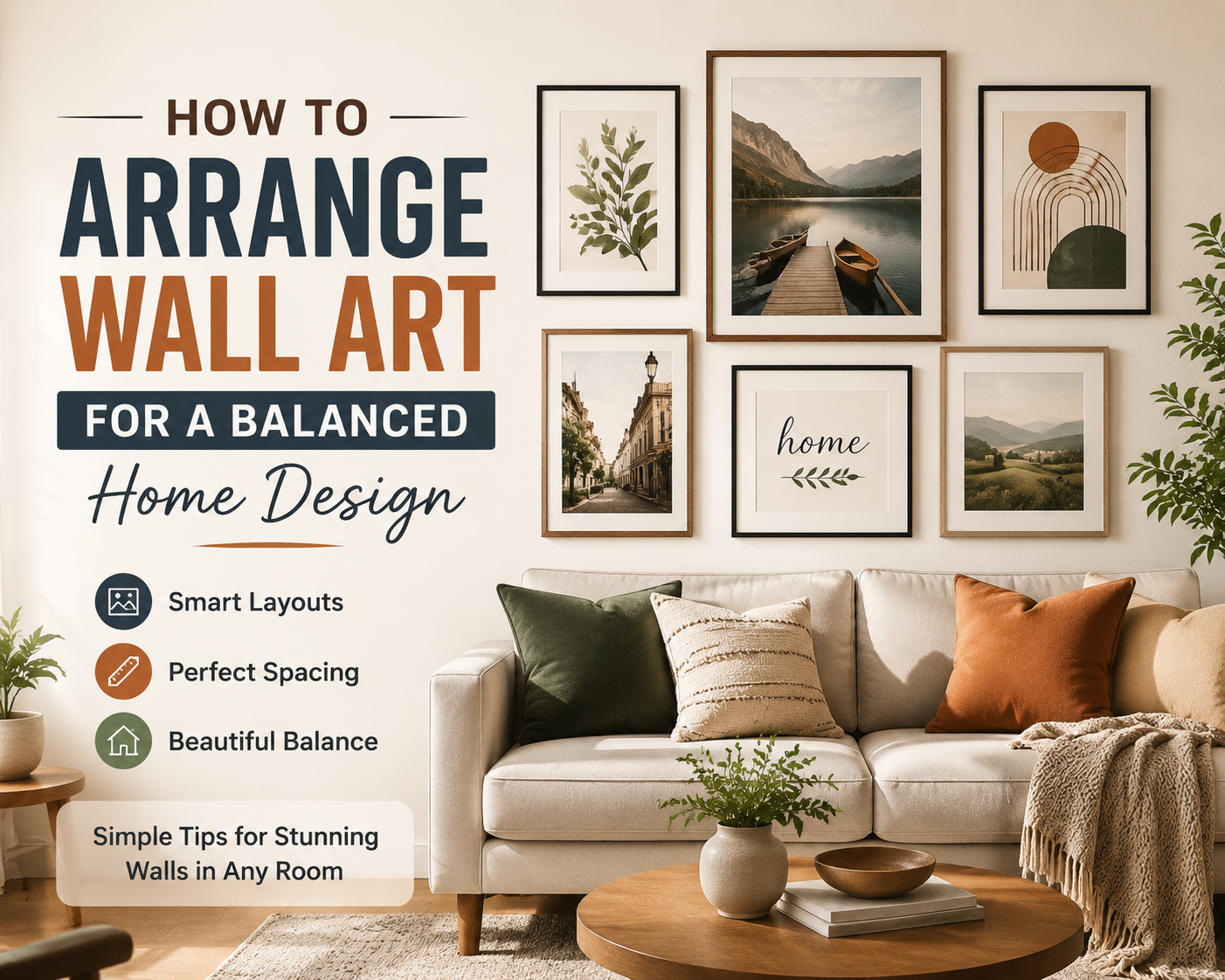
Place the largest artwork in the center and arrange smaller pieces around it.
This creates a strong focal point.
3. Consider Wall and Furniture Proportion
A common mistake is creating a gallery wall that is too small for the space.
Your wall display should relate to nearby furniture.
For example:
- Above a sofa: the artwork should generally cover a large portion of the sofa width
- Above a console table: leave enough space between furniture and frames
- Large walls need larger compositions
A properly sized gallery wall makes the entire room feel more connected.
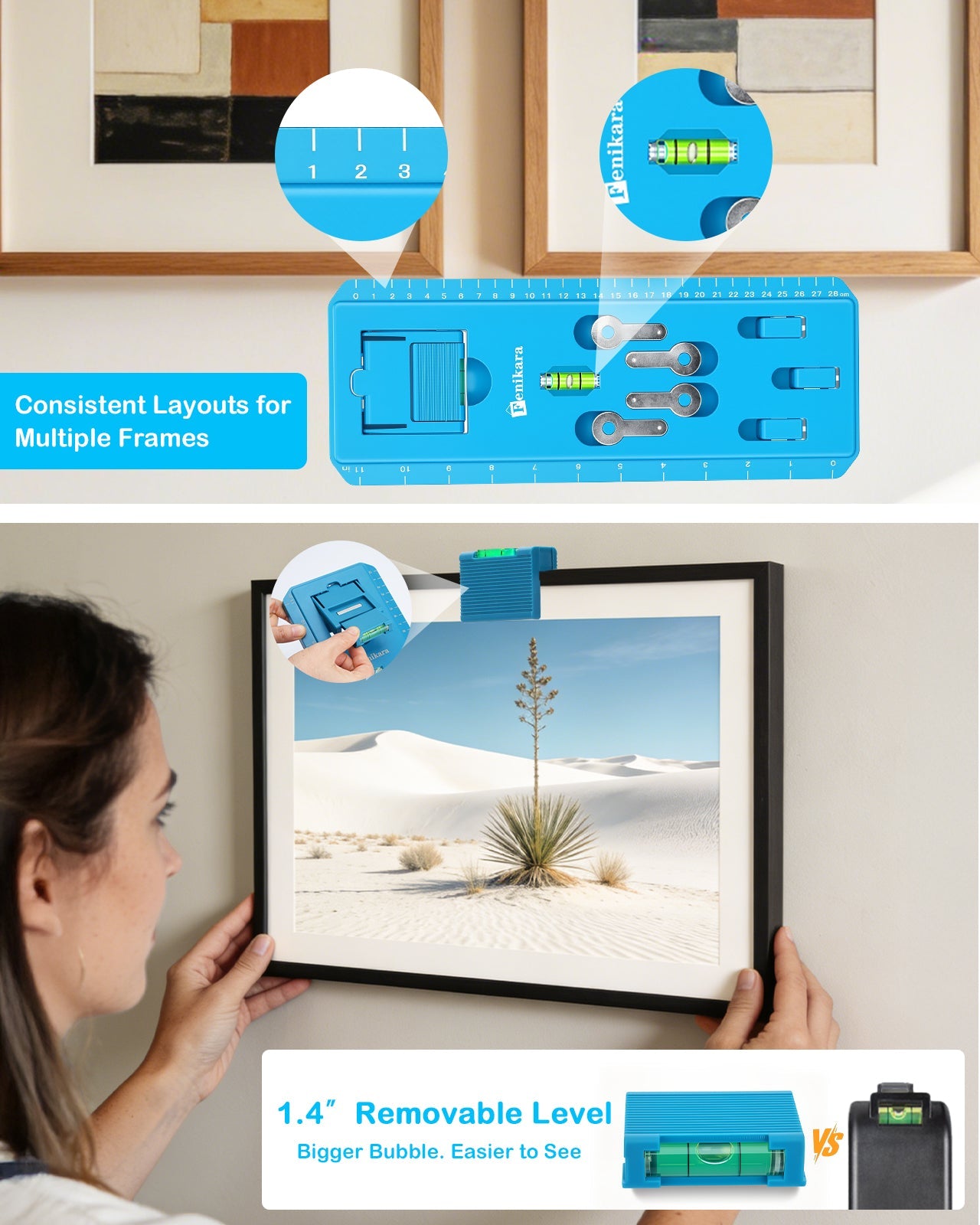
4. Keep Consistent Spacing
Spacing is one of the biggest factors that affects the final result.
Too much space:
- The frames feel disconnected
Too little space:
- The wall looks crowded
A balanced gap between frames helps create a professional appearance.
Before hanging, many designers recommend planning the arrangement first.
5. Create a Layout Before Making Holes
Instead of immediately drilling into the wall:
- Measure your wall area
- Arrange your frames on the floor
- Take a photo of the layout
- Adjust spacing and position
- Transfer the design to the wall
This simple planning step can prevent unnecessary mistakes.
Conclusion
A beautiful gallery wall is about balance, not perfection.
By choosing a theme, selecting the right layout, considering proportions, and planning before installation, you can transform an empty living room wall into a stylish feature that reflects your personality.