Start With One Wall That Matters
Small-space wall art works best when it gives the room a clear focus without crowding the furniture or walkways. Begin with one wall, choose a piece or compact grouping that fits it, and leave enough empty space for the arrangement to feel deliberate.
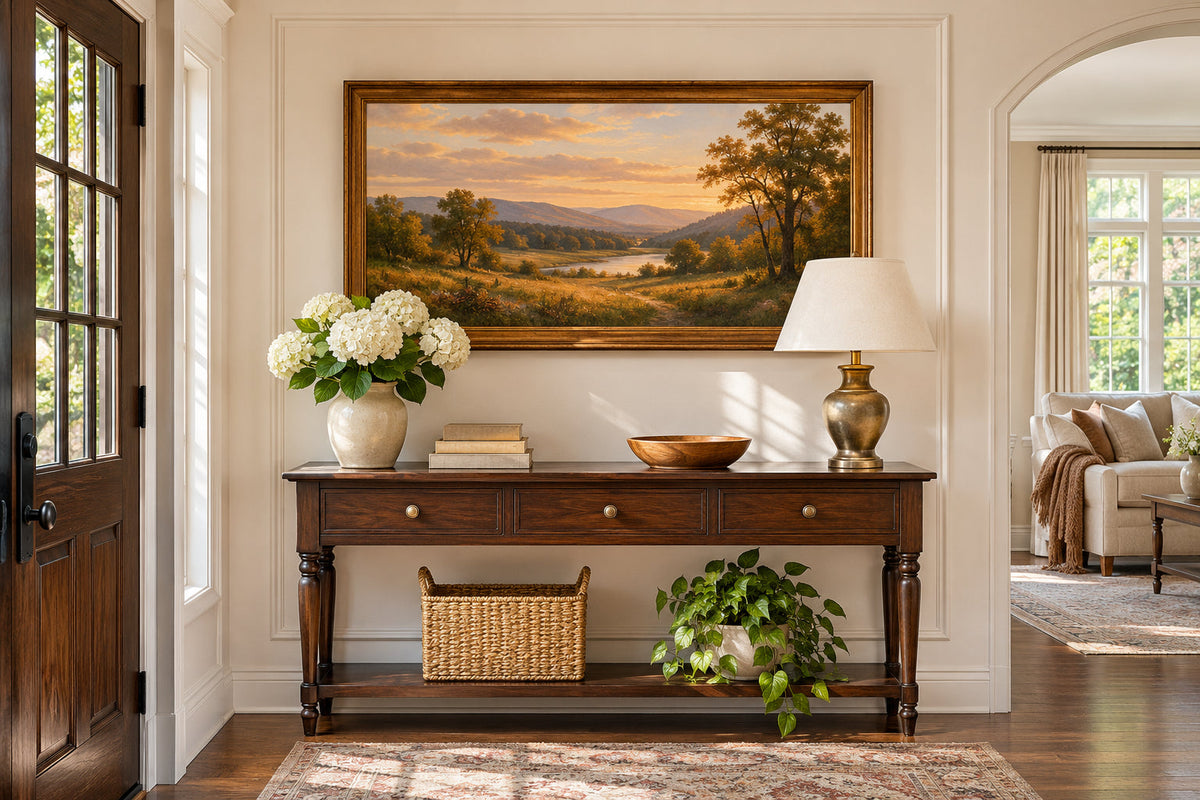
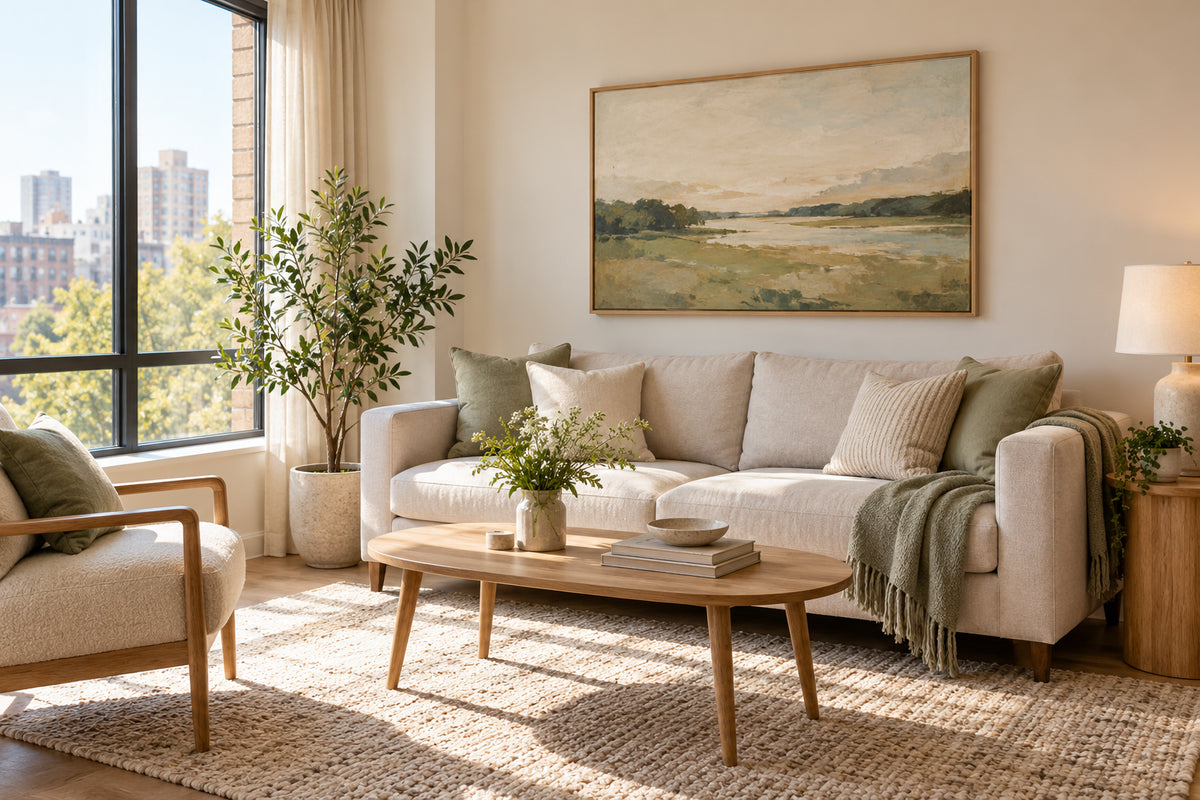
A small room does not require tiny art everywhere. One medium or larger picture can sometimes feel calmer than many small frames scattered across every available surface. The useful question is how the art relates to the room, rather than how many pieces will fit.
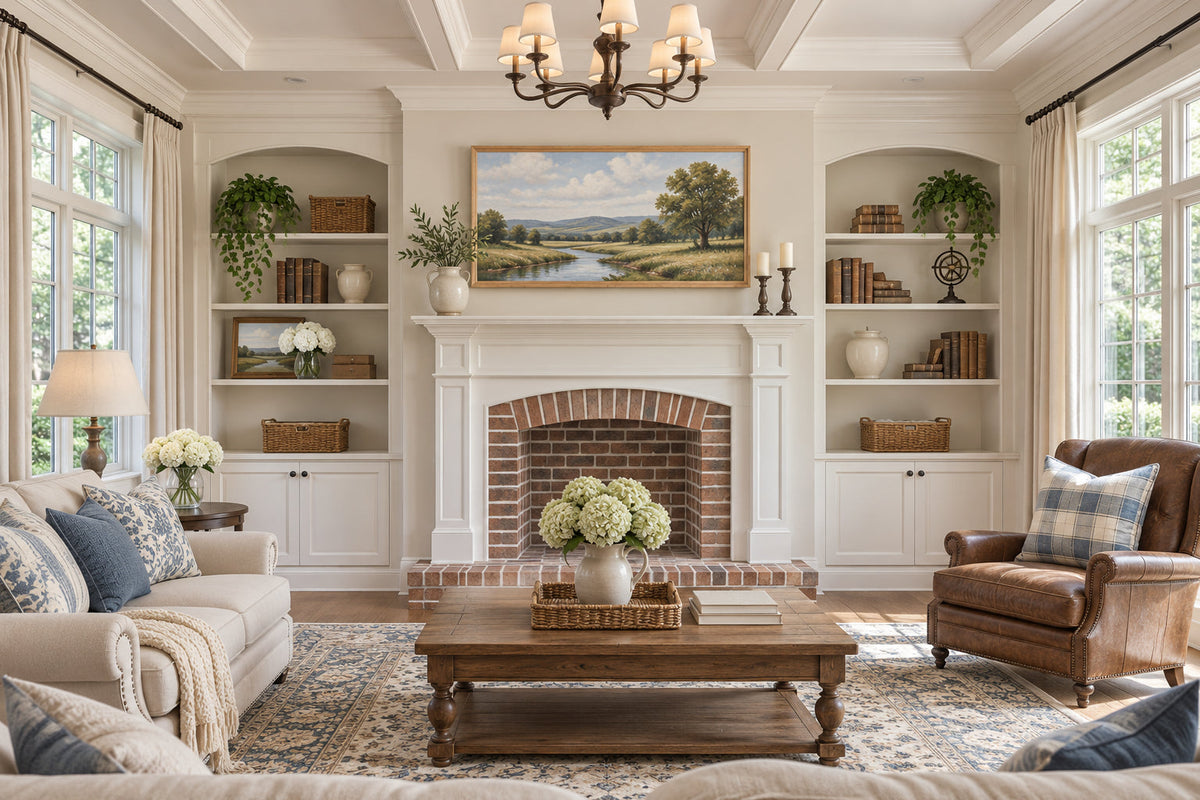
1. Give the Room a Main Focal Point
Look at the room from its entrance. Notice what you see first: a sofa, a dining nook, a desk, or a window. Choose an art location that works with that view instead of competing with all of it.
If the room already has patterned curtains, open shelves, and colorful furniture, a simple artwork arrangement can give the eye somewhere to rest. If the room is mostly quiet and neutral, a bolder print can provide a clear point of interest.
You do not have to decorate every wall at once. Finish one area, live with it for a while, and decide whether another wall actually needs attention.
2. Test a Larger Piece Before Buying Several Small Ones
Multiple small frames can create a beautiful display, but they also introduce more edges, gaps, and alignment decisions. One larger piece gives you fewer separate elements to balance.
Try a paper rectangle that matches the outside dimensions of a frame you are considering. View it above the sofa, desk, or console from across the room. Check whether it feels connected to the furniture and whether it crowds nearby doors, lamps, or shelves.
Include the frame border in your mockup. A print described as 16 by 20 inches may occupy more wall space once it has a mat and frame. Use the finished outside dimensions when comparing options.
The goal is a comfortable fit, not the largest artwork the wall can physically hold.
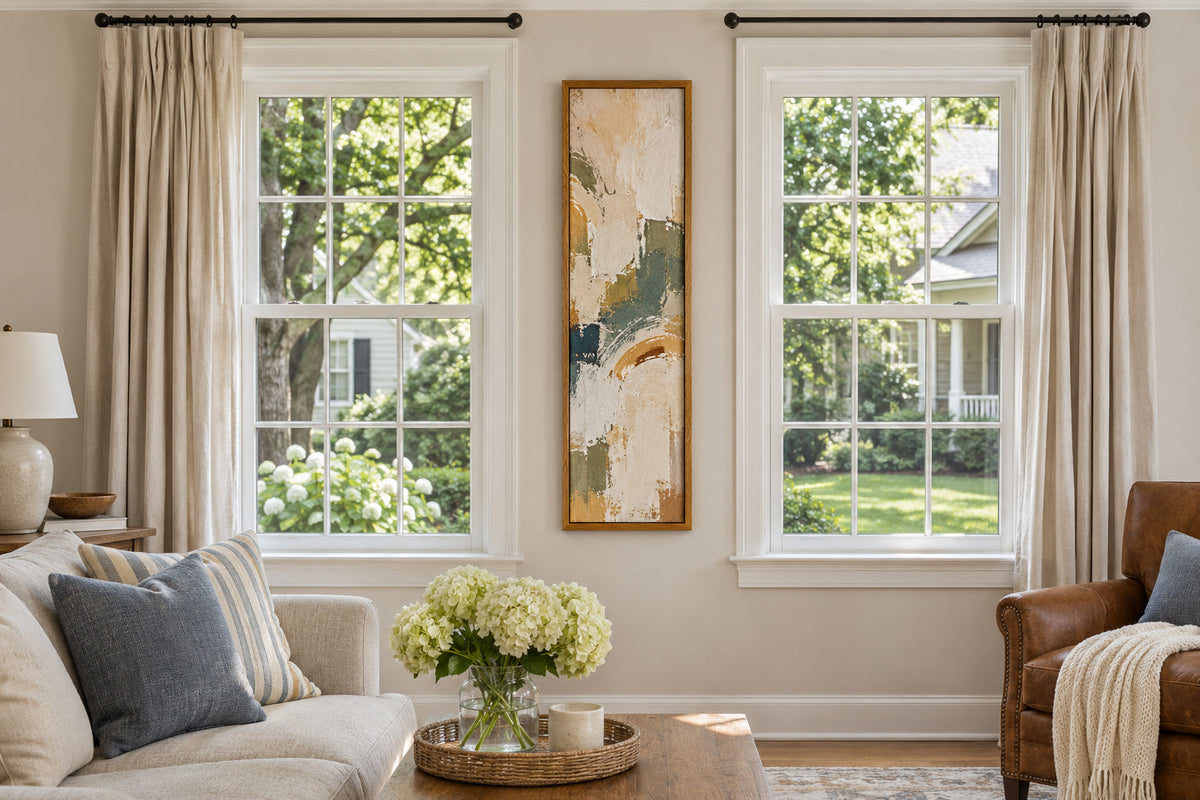
3. Use Narrow Walls With a Vertical Arrangement
A narrow wall beside a window or above a compact desk may suit two vertically arranged pictures. Repeating a frame size or color can help them read as one display.
Keep the grouping inside the usable wall area. Avoid squeezing a picture so close to a window trim or doorway that its placement looks accidental. Check that doors can open fully and that the display does not interfere with switches or everyday movement.
A vertical arrangement uses the shape of the wall; it does not physically make the room taller. Treat it as a composition choice rather than a guaranteed space-expanding trick.

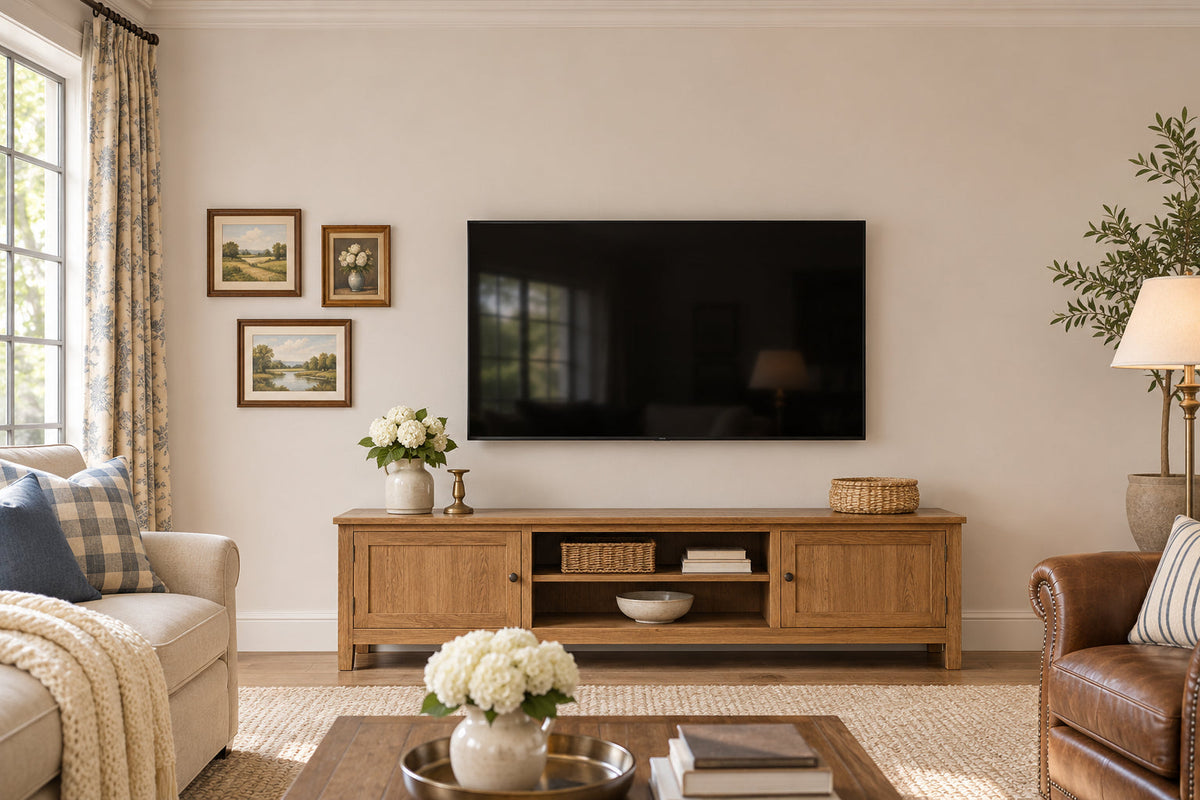
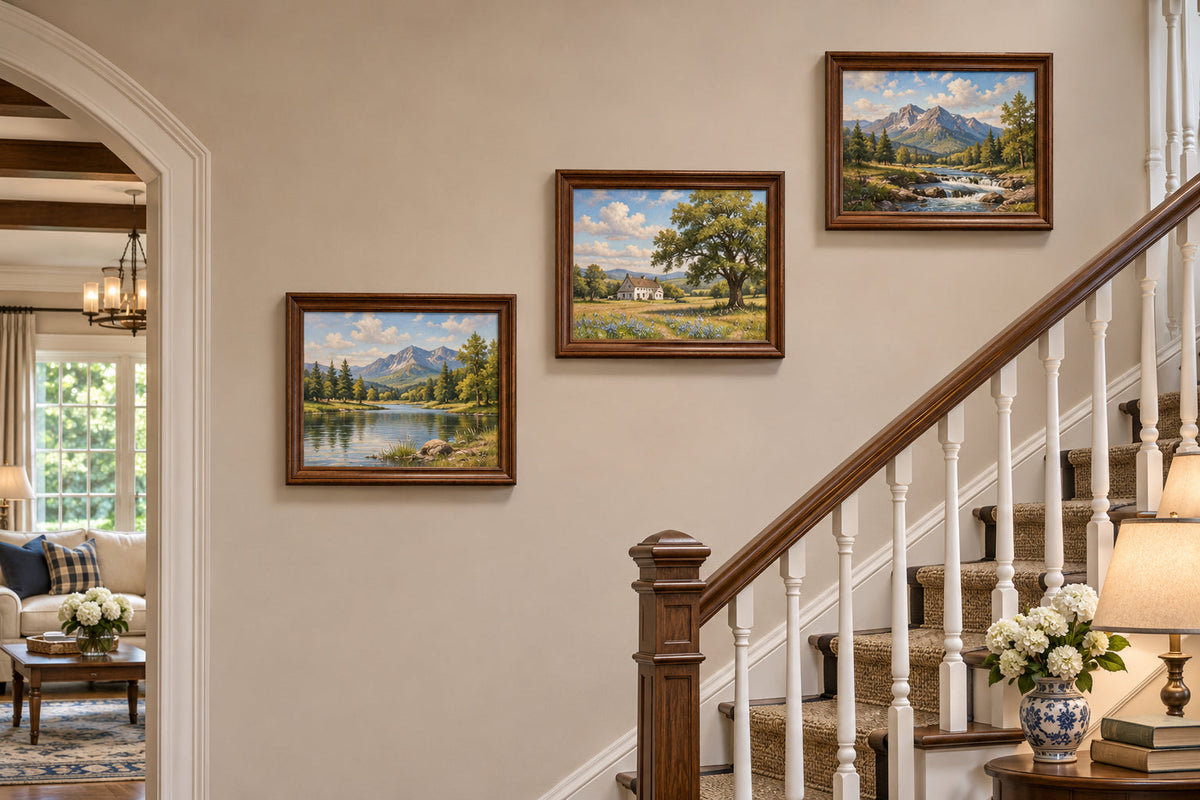
4. Keep a Small Gallery Wall Cohesive
If you want several pictures, give them a shared connection. That might be black frames, pale wood, similar mats, black-and-white photography, or a repeated accent color.
You do not need every element to match. Choose one or two things to repeat and let the artwork itself vary. This can make a collection feel personal without making every piece compete for attention.
Start by arranging the frames on the floor. Remove one or two and compare the result. In a compact room, editing the collection can be more useful than finding another gap to fill.
Keep the display concentrated in one area instead of letting isolated frames drift toward the ceiling or around furniture corners.
5. Use Color to Connect the Artwork and Room
Look for a color already present in a cushion, rug, chair, or blanket. An artwork that repeats a little of that color can help the room feel connected without requiring an exact match.
If the furniture and fabrics are busy, try art with a quieter background or a simpler composition. If the room is pale and minimal, a darker frame or more saturated image can create contrast.
Avoid choosing a picture only because it matches the couch. Subject, mood, and personal meaning matter too. A room can accommodate a meaningful artwork even when its colors do not repeat elsewhere.
6. Leave Some Wall Space Empty
Empty wall space gives each picture a visible boundary. It also separates artwork from nearby shelves, curtains, and furniture so that the display is easier to read.
Before adding another frame, ask what it contributes. Does it complete the grouping, balance a larger piece, or show something you enjoy? If its only purpose is covering a blank patch, leave that patch alone for now.
Try removing a tabletop ornament near the artwork as well. Sometimes the wall arrangement is fine, but the objects directly beneath it make the whole area feel crowded.
7. Check the View From Where You Actually Sit
Art can look balanced when you stand close to it and feel awkward from a nearby chair. Check the placement while seated, while entering the room, and while moving through the space.
Watch for glare from windows and lamps. A small shift in position may improve the view, but protect sensitive artwork according to its care instructions rather than relying on placement alone.
For walls above furniture, judge the relationship between the frame and the furniture underneath. Do not raise every picture simply because the ceiling is high or the room is narrow.
Common Small-Room Decorating Mistakes
- Choosing many tiny pictures before testing one larger composition.
- Mixing several unrelated frame styles in a very compact display.
- Filling every wall instead of choosing a main area of interest.
- Forgetting the outside frame dimensions when planning placement.
- Ignoring glare, door clearance, or the view from nearby seating.
Frequently Asked Questions
Can I use large wall art in a small room?
Yes, if the finished frame fits the usable wall area and works with the furniture. Test its full outside dimensions with paper before deciding.
Do small rooms need light-colored frames?
No. Dark frames can provide useful contrast. Choose a finish that suits the artwork and repeat it thoughtfully if you want a cohesive grouping.
Should every wall in a small room have artwork?
No. One well-placed display can be enough. Leave other areas empty when additional art would crowd the room or compete with its focal point.
Choose one wall, test the size, and view the arrangement from your normal seats and walkways. Keep the pieces you enjoy and give them enough room to be seen.