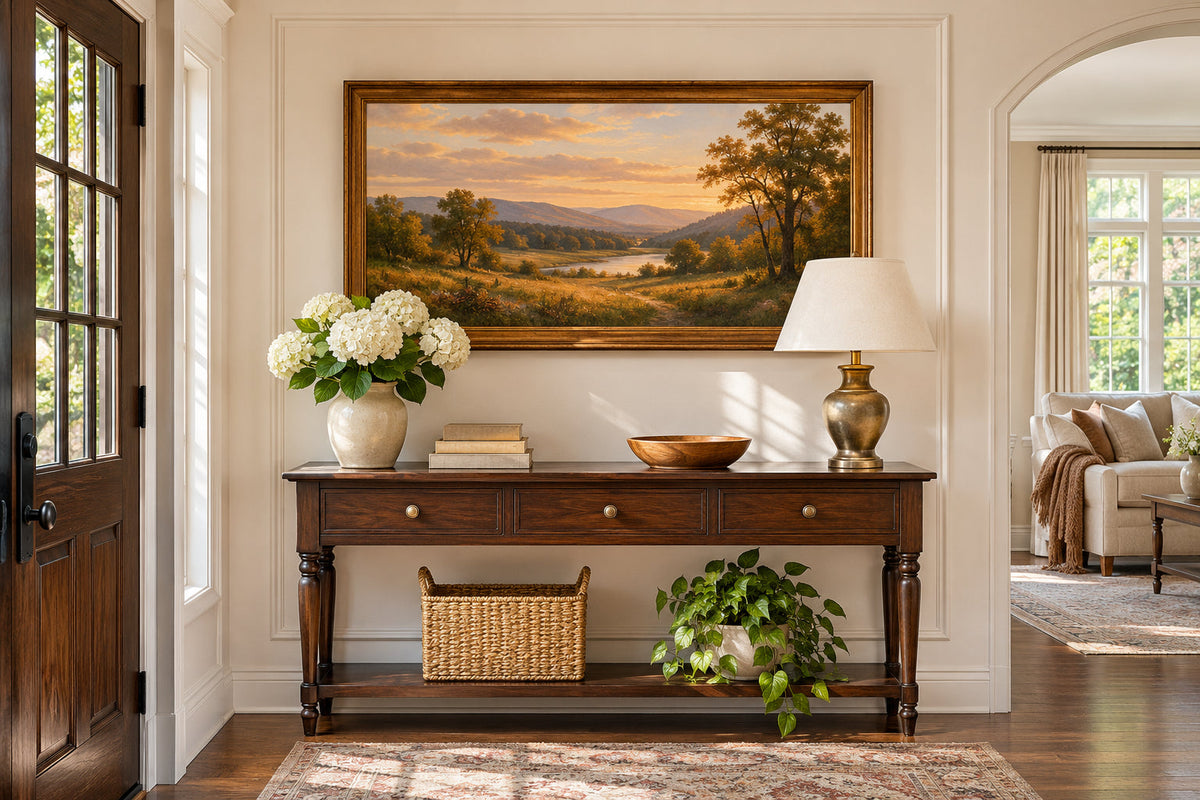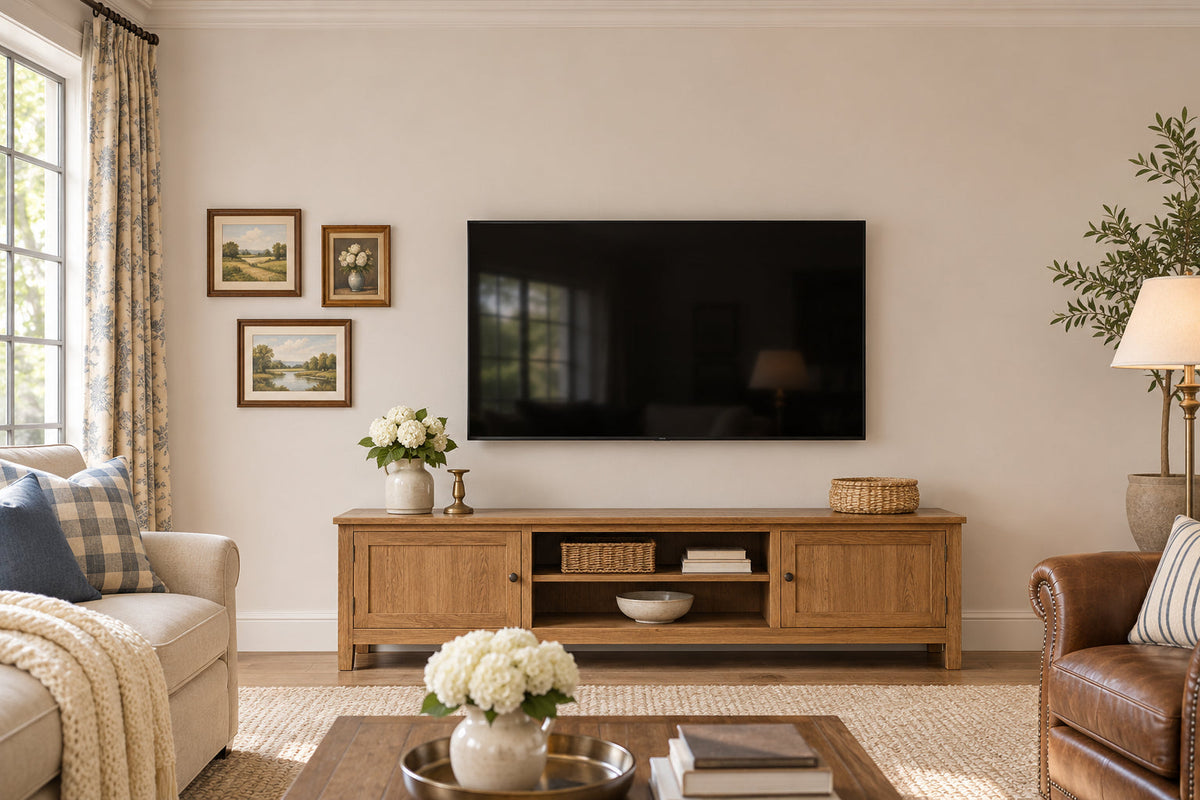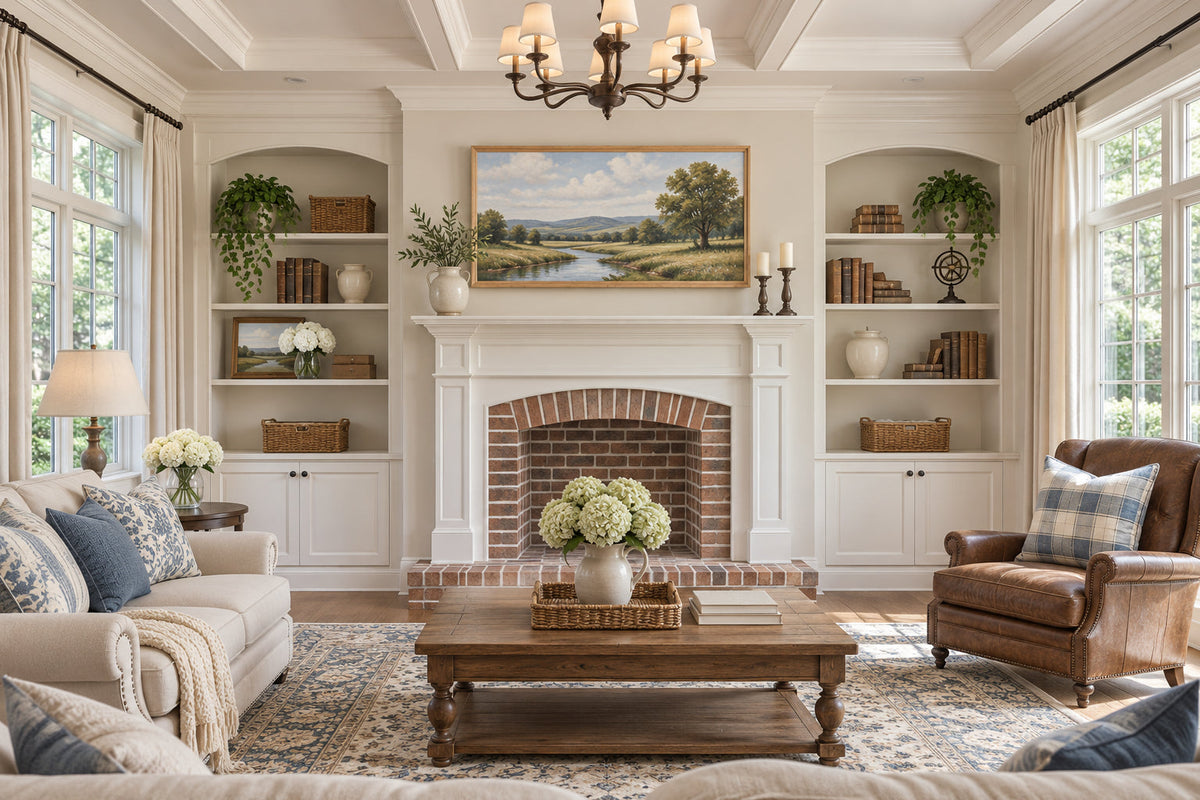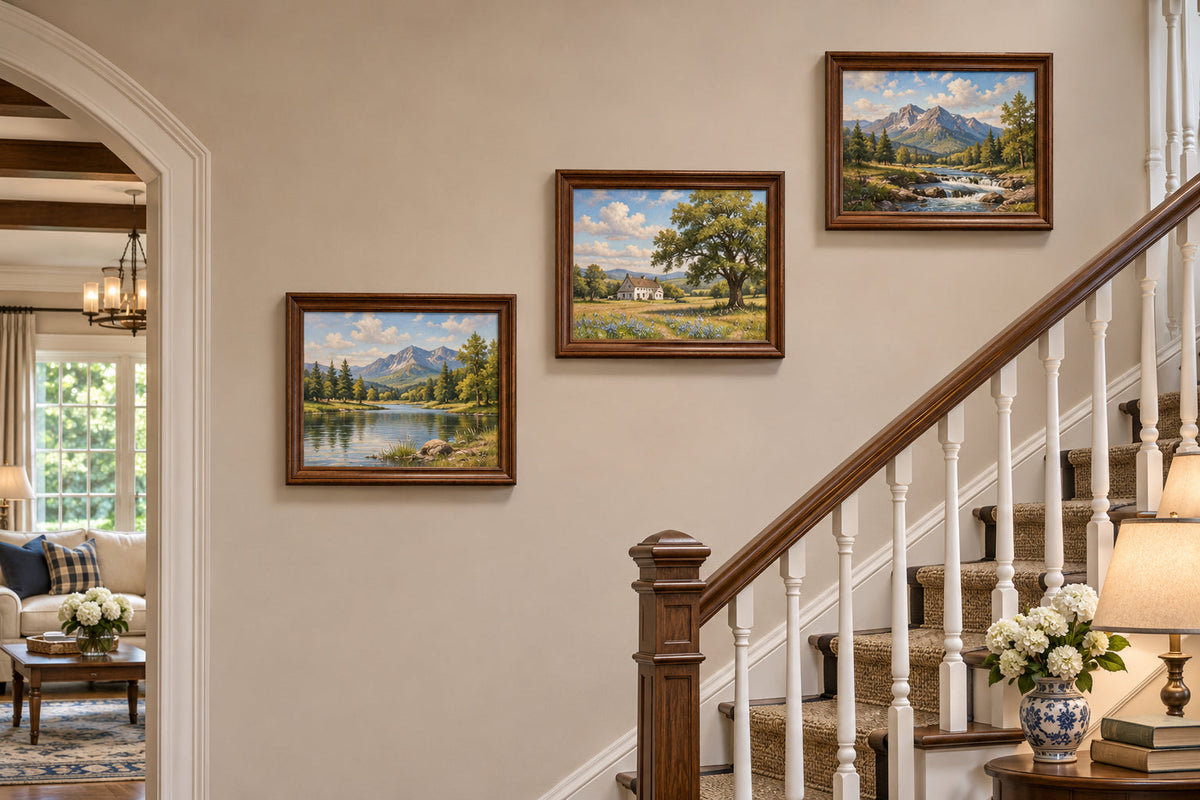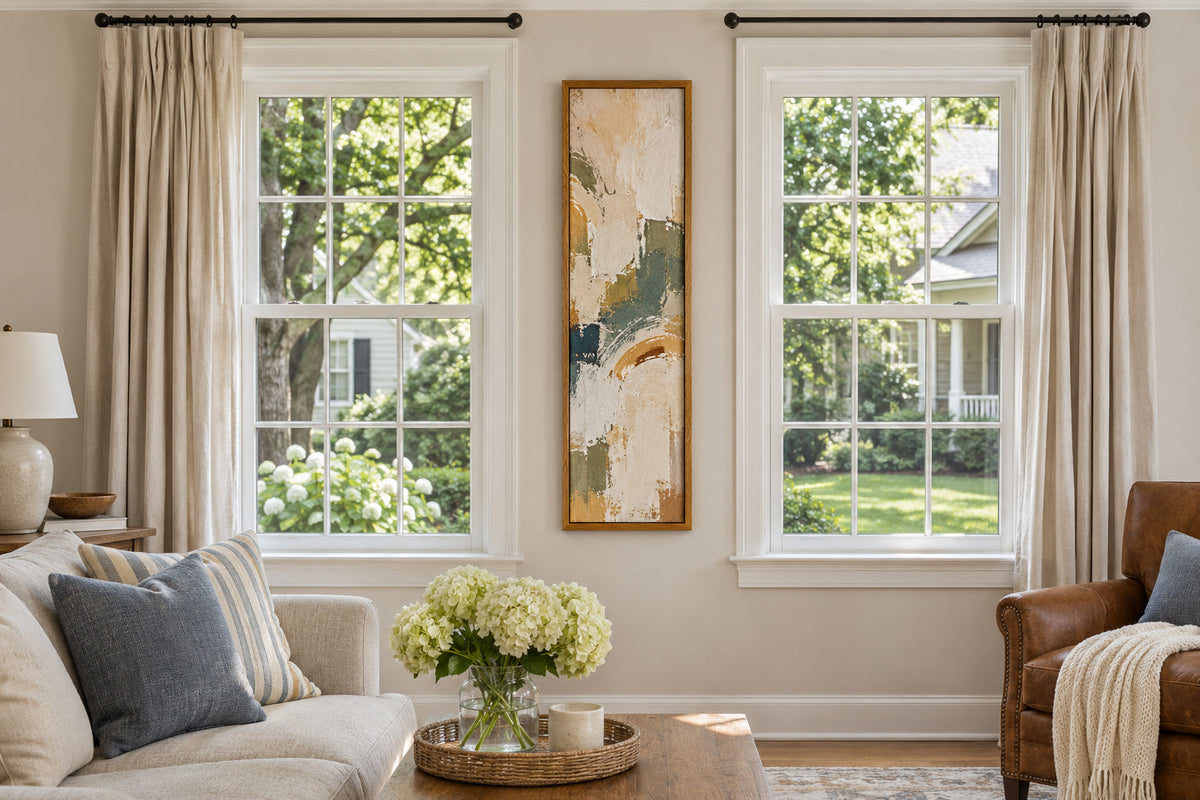
Choose art that fits the space you actually see between the windows when the room is in use. A tall narrow frame and a stack of two small prints can both work. Start by measuring around the curtains or shutters, then compare those options at full size before hanging anything.
1. Measure with the curtains open
Open the curtains as you normally would and measure the wall that’s still visible between the fabric on both sides. Measure again higher and lower if the curtains bunch unevenly. For blinds or shutters, check where the slats, panels, and controls move.
For example, if the visible wall is 22 inches wide when the curtains are open, a 14-inch frame centered in that opening leaves about 4 inches on either side. Use the outside frame width for this calculation; the print size on the packaging does not include the frame.
2. Compare one tall frame with two small ones
Try one tall frame if you want a single focal point. If you have two small prints, stack them vertically and give them a consistent gap. Compare the overall height of the pair, including the gap, with the room around the windows.

3. Center a paper outline in the usable space
Trace the outside of the frame or frames onto paper. Use tape suitable for your wall finish to place the outline in the middle of the wall that remains visible. Check it with the curtains both open and closed and move the outline if fabric brushes its edges.

4. Check the art from where you use the room
Look from the doorway and your usual seat. If the frame feels crowded by the trim, try a narrower outline. If afternoon sun makes the print difficult to see or would fall directly on something you want to preserve, choose a different spot or a reproduction.
Once you like the position, mark the outline’s center and top edge before removing the paper. Use the frame hardware to find the actual support point. For a vertical pair, measure each frame independently so the gap you previewed carries through to the finished layout.