Can You Score Bread Without a Lame?
Yes, you can absolutely score bread without a bread lame. A sharp knife, a razor blade, or even kitchen scissors can do the job. The key is making a quick, clean cut right before baking so the dough has space to expand. While a bread lame knife is designed to make this easier, you can still get good results using simple tools you already have.
What matters most is technique—not just the tool.
Why Bread Needs to Be Scored
Before choosing a tool, it helps to understand why scoring is important.
As bread bakes, heat causes gases inside the dough to expand quickly. This creates pressure under the surface. If there’s no cut to guide that pressure, the bread will break open on its own.
That often leads to:
-
uneven shapes
-
torn crust
-
unpredictable results
Scoring creates a controlled opening, allowing the bread to rise in a more even and intentional way.
What Can You Use Instead of a Bread Lame?
If you don’t have a bread scoring lame, don’t worry. There are a few simple alternatives that work surprisingly well.
A Sharp Knife
A small, sharp knife is the easiest substitute.
To make it work:
-
use the sharpest blade you have
-
avoid serrated knives
-
keep your movement quick and light
A paring knife usually works better than a large chef’s knife.
A Razor Blade
A loose razor blade can get very close to the performance of a bread lame knife.
It’s thin, sharp, and ideal for clean cuts. The only downside is that it doesn’t have a handle, so you’ll need to be careful when holding it.
Kitchen Scissors
Scissors don’t create long slashes, but they’re useful for simple cuts.
They work best for:
-
small loaves
-
rolls
-
quick snip-style patterns
This method gives bread a more rustic look.
Step-by-Step: How to Score Bread Without a Lame
Even without a bread lame, the process is straightforward once you know what to focus on.
1. Score Right Before Baking
Always score your dough just before it goes into the oven.
Waiting too long can cause the surface to dry out, making it harder to cut cleanly.
2. Work With Cold Dough
If possible, score dough that has been chilled.
Cold dough:
-
is firmer
-
holds its shape better
-
is less sticky
This makes it much easier to get a clean cut without dragging.
3. Use One Smooth Motion
Instead of slowly cutting, aim for one quick, confident slash.
-
don’t saw back and forth
-
don’t press too hard
-
let the blade glide
This is one of the biggest differences between clean and messy scoring.
4. Don’t Go Too Shallow or Too Deep
A good cut is usually around ¼ to ½ inch deep.
-
too shallow → the cut may close during baking
-
too deep → the loaf can lose structure
Finding the right depth takes a bit of practice.
Tips for Getting Cleaner Cuts
Without a dedicated bread lame, small details make a big difference.
Keep Your Blade Very Sharp
Sharpness matters more than anything else.
A dull blade will:
-
pull the dough
-
create rough edges
-
make scoring harder
Lightly Flour the Surface
A light dusting of flour can reduce sticking and help your blade move more smoothly.
Stay Relaxed
Tension in your hand often leads to slow or uneven cuts.
Try to keep your grip loose and your movement natural.
Common Mistakes to Avoid
When scoring without a bread lame, a few mistakes show up often.
Cutting Too Slowly
This is probably the most common issue. Slow cuts tend to drag instead of slice.
Using the Wrong Knife
Thick or dull knives make clean scoring almost impossible.
Scoring Warm Dough
Warm dough is softer and harder to control. It can stick to the blade and lose shape.
Not Cutting Deep Enough
If your cut is too shallow, the bread may still burst somewhere else during baking.
When a Bread Lame Makes Things Easier
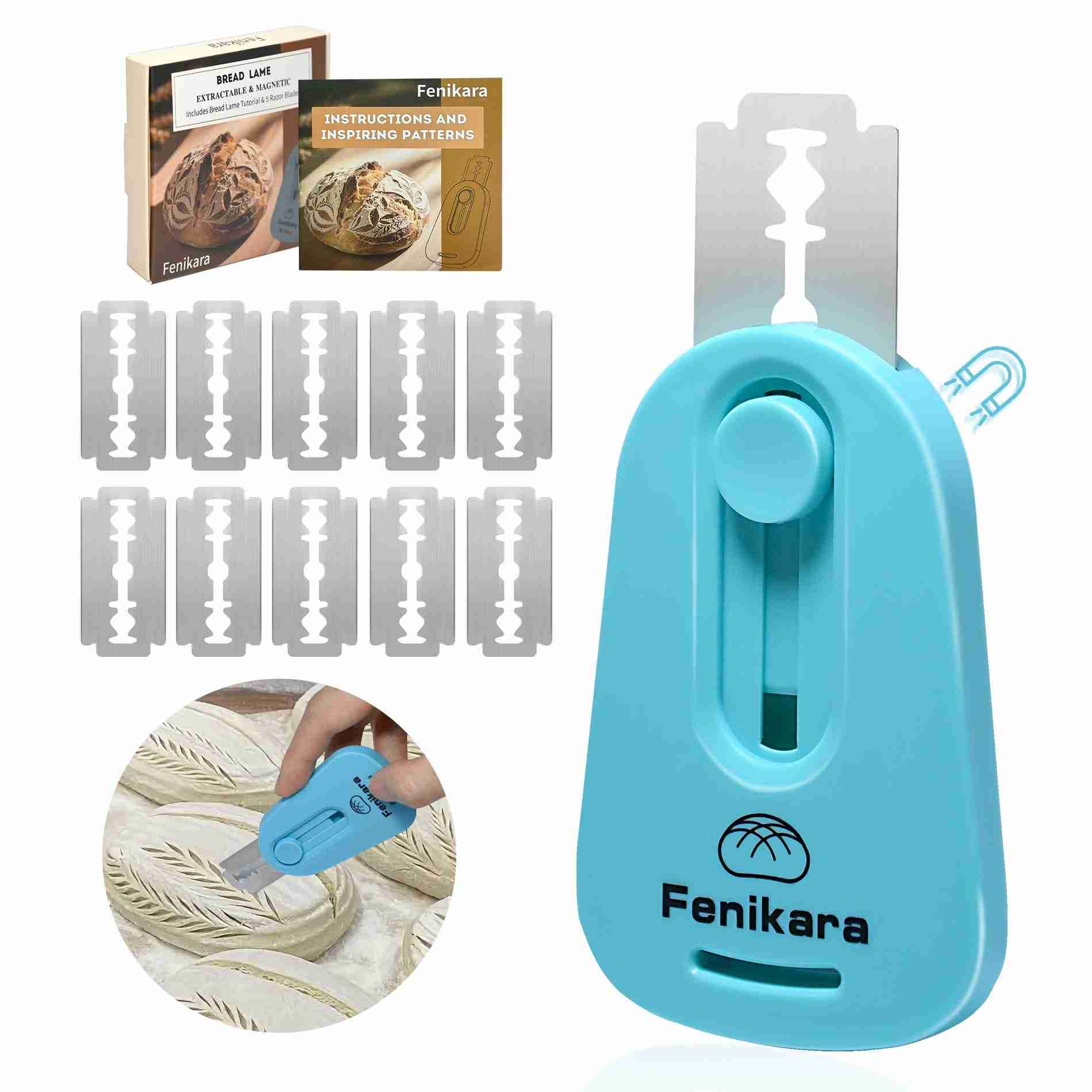
Even though you can score without one, a sourdough bread lame does make the process more consistent.
It becomes especially useful when:
-
working with soft, high-hydration dough
-
trying to create clean, defined cuts
-
practicing more advanced scoring patterns
-
baking frequently
The thin blade and handle design give you more control with less effort.
Easy Scoring Patterns You Can Try
You don’t need a bread lame to try simple scoring styles.
One Long Slash
This is the easiest and most reliable option. It helps guide the bread’s rise in one direction.
Cross Cut
Two simple cuts crossing each other allow the bread to expand evenly.
Snip Pattern
Using scissors, you can make small cuts across the surface for a textured, rustic look.
Does the Tool Really Matter?
The tool helps, but it’s not everything.
Your results also depend on:
-
how well the dough is fermented
-
how you shape the dough
-
how hot your oven is
-
how you score the dough
A bread lame improves control, but good bread comes from the full process.
Final Thoughts
You don’t need a bread lame to score bread successfully. With a sharp knife, a razor blade, or even scissors, you can still guide how your dough expands and get good baking results.
That said, using a bread scoring lame can make scoring easier, cleaner, and more consistent—especially if you bake sourdough often.
If you’re just starting out, use what you have and focus on technique. As you gain experience, you’ll naturally find what works best for you.
In the end, good scoring comes down to practice, not just the tool.