Bread Lame vs Knife: Which Should You Use?
When it comes to scoring bread, a bread lame is usually the better choice compared to a knife. A bread lame uses a thin razor blade that cuts cleanly through soft dough, while a knife often drags or tears the surface. This makes a bread scoring lame more effective for controlling oven spring and creating smooth, consistent scoring lines.
That said, both tools can work depending on your experience and the type of bread you’re making.
What Is a Bread Lame?
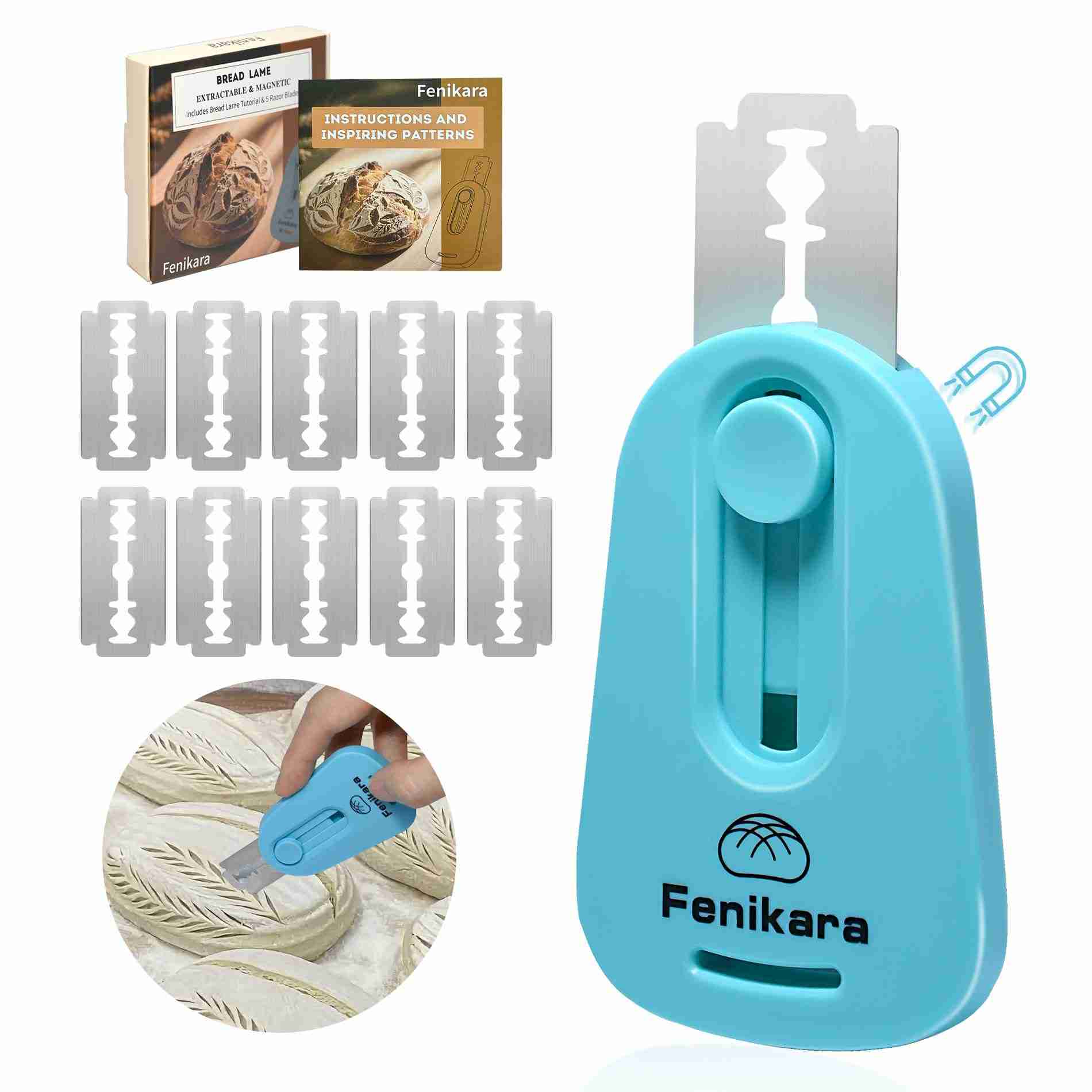
A bread lame is a small tool designed specifically for scoring bread dough before baking. It typically holds a razor blade, allowing bakers to make thin, precise cuts in the surface of the dough.
These cuts help guide how the bread expands in the oven and prevent random cracking.
Bread lames are commonly used for:
-
sourdough bread
-
artisan loaves
-
baguettes
-
high-hydration dough
You may also hear it called:
-
bread scoring lame
-
bread lame knife
-
sourdough bread lame
-
lame bread tool
Why Scoring Bread Matters
Before comparing tools, it’s important to understand why scoring is necessary.
When dough bakes, heat causes gases inside to expand quickly. This creates pressure against the outer surface of the dough.
If you don’t score the dough, the crust may:
-
crack unpredictably
-
split unevenly
-
affect the final shape
Scoring creates a controlled opening that allows the bread to expand properly.
Using a Bread Lame: Pros and Cons
Advantages of a Bread Lame
A bread scoring lame is designed specifically for scoring, which gives it several advantages.
Cleaner Cuts
The razor blade is extremely thin, so it slices through dough smoothly without dragging.
Better Control
Bread lames are lightweight and easy to handle, making it easier to control depth and direction.
Improved Oven Spring
Clean cuts help the bread expand more evenly during baking.
Ideal for Sourdough
High-hydration doughs like sourdough benefit the most from a sharp blade.
Disadvantages of a Bread Lame
While bread lames are effective, they do have a few downsides.
-
razor blades need to be replaced regularly
-
requires careful handling due to sharpness
-
may take practice for beginners
Using a Knife: Pros and Cons
Advantages of a Knife
A knife is a common kitchen tool and can be used for scoring in some situations.
Easy to Access
Most people already have a knife at home, so no extra tool is required.
Works for Firmer Dough
For lower hydration doughs, a sharp knife can sometimes work well.
Disadvantages of a Knife
However, knives are not designed for scoring soft dough.
Thicker Blade
Knife blades are thicker, which can drag or compress the dough.
Less Precision
It is harder to control shallow, clean cuts.
Uneven Results
Cuts made with a knife may not open properly during baking.
Bread Lame vs Knife: Key Differences
Here’s a simple comparison between the two tools.
Blade Thickness
-
bread lame → very thin razor blade
-
knife → thicker cutting edge
Thin blades create cleaner scoring lines.
Cutting Performance
-
bread lame → smooth, clean cuts
-
knife → may drag or tear dough
Control and Accuracy
-
bread lame → easier to control
-
knife → requires more effort and skill
Best Use Case
-
bread lame → sourdough and artisan bread
-
knife → simple or firm dough
When Can You Use a Knife Instead?
Even though a bread lame is preferred, there are situations where a knife can still work.
You can use a knife if:
-
the dough is not very sticky
-
the blade is extremely sharp
-
you are making simple scoring cuts
A small, sharp knife (like a paring knife) works better than a large one.
Still, results may not be as consistent as using a dedicated bread lame knife.
How to Get Better Results with Either Tool
Whether you use a bread lame or a knife, technique matters.
Use a Quick Motion
Slow cuts tend to drag the dough. A fast, confident motion works best.
Score at the Right Time
Always score the dough right before baking.
Cold dough is easier to cut cleanly.
Cut to the Correct Depth
Most scoring cuts should be about ¼ to ½ inch deep.
Keep Your Blade Sharp
A sharp blade is one of the most important factors for clean scoring.
Why Most Bakers Prefer a Bread Lame
Most home bakers and professional bakers prefer using a sourdough bread lame because it provides more consistent results.
Over time, using a bread lame can help:
-
improve scoring accuracy
-
create better-looking loaves
-
make baking more predictable
Even though a knife can work in some cases, a bread lame is usually the more reliable option.
Common Beginner Question
Can You Bake Good Bread Without a Bread Lame?
Yes, you can still bake good bread without a bread lame.
However, using a bread lame makes it easier to:
-
control the shape of the loaf
-
improve oven spring
-
create cleaner scoring patterns
For beginners, it often helps simplify the scoring process.
Final Thoughts
When comparing bread lame vs knife, the bread lame is generally the better tool for scoring bread. Its thin razor blade creates cleaner cuts, offers better control, and helps guide oven spring more effectively.
A knife can still work in certain situations, especially for simple or firmer doughs. However, for sourdough and artisan bread, a bread lame provides more consistent and professional-looking results.
If you plan to bake bread regularly, learning how to use a bread lame can make a noticeable difference in both the appearance and quality of your loaves.