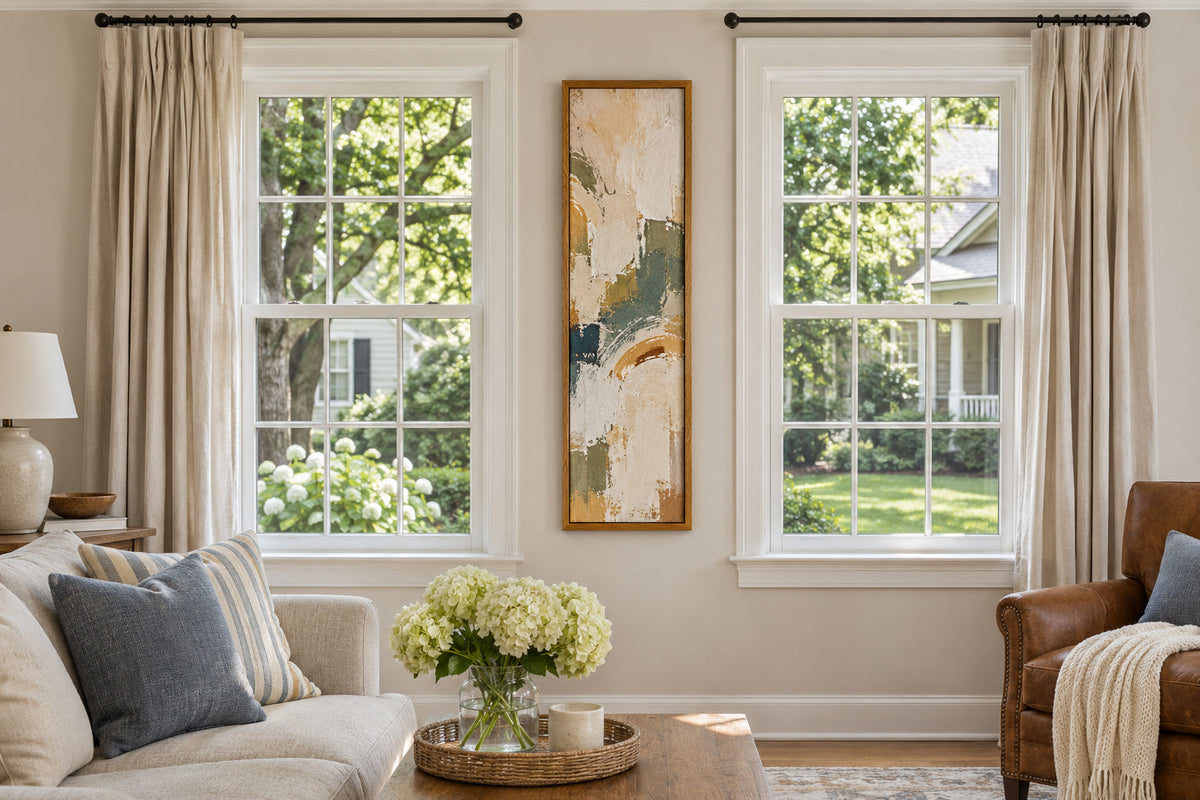
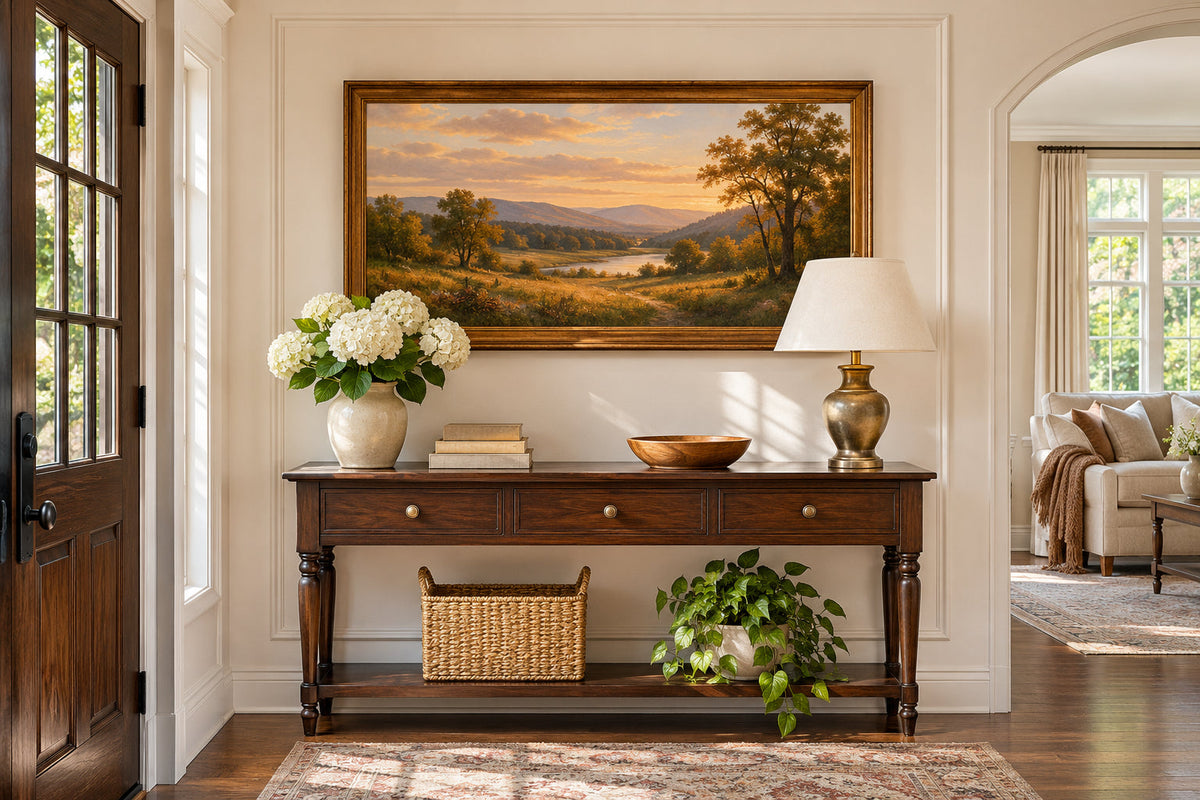
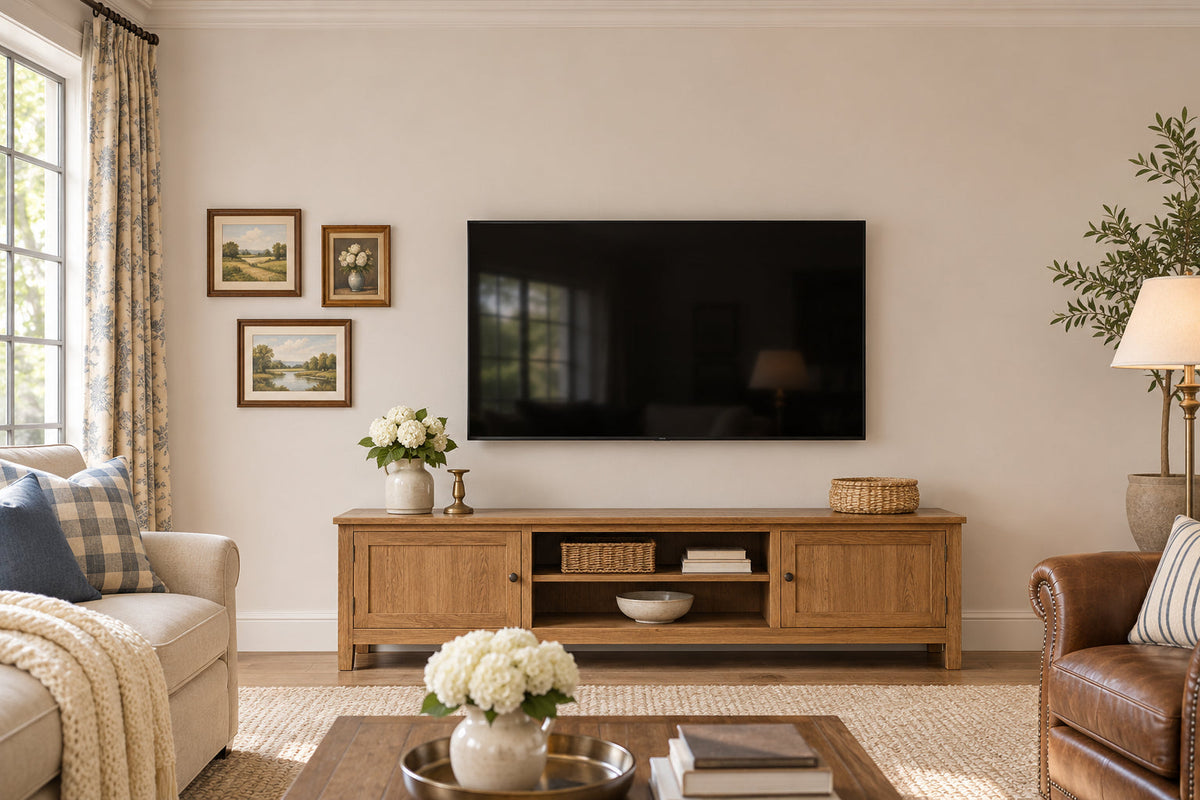
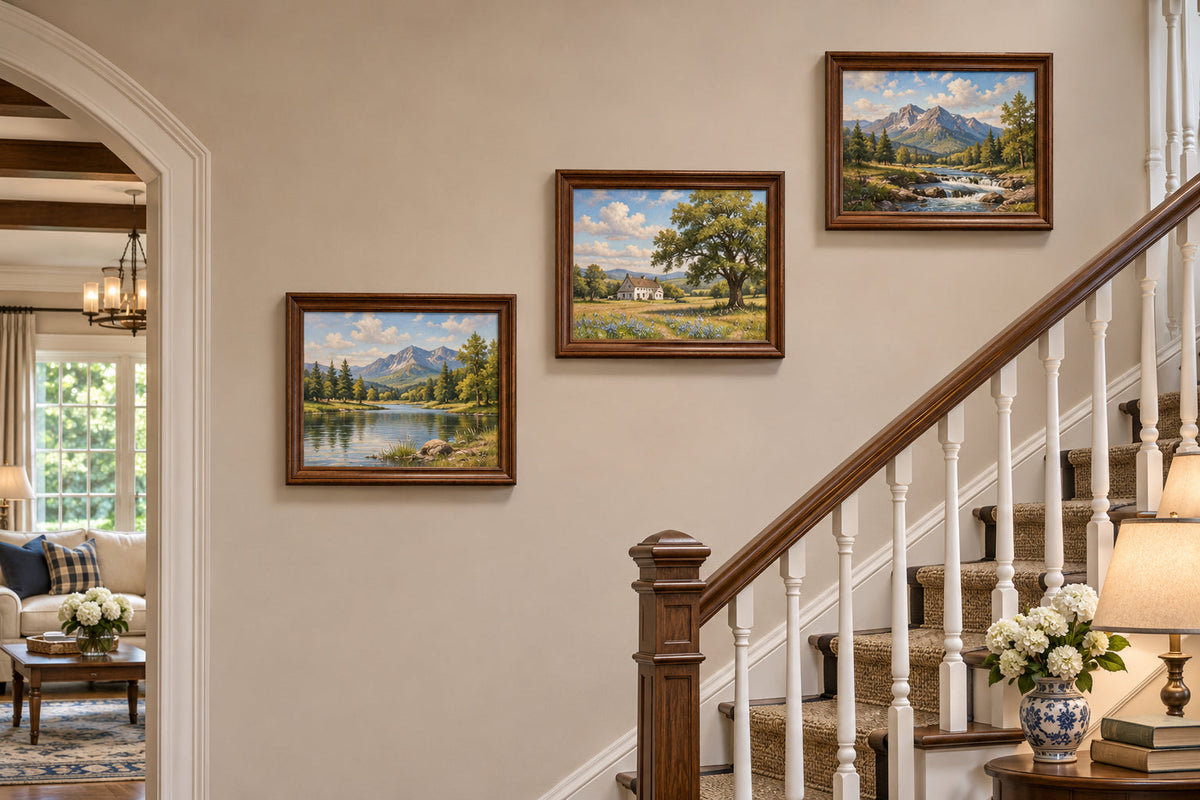
A print can look perfect while you’re standing beside it and disappear behind a bright reflection as soon as you sit down. Before replacing the frame or putting another hole in the wall, find out what the glass is reflecting and where you normally see it.
Find the source from your usual seat
Look at the frame from the couch, desk, or doorway where you see it most often. If the reflection looks like a bright rectangle, partly close the shade and check again. If it looks like a small bright spot, switch nearby lamps off one at a time. Repeat the check in the evening if you use the room after dark. The same frame can reflect a window in the morning and a floor lamp at night.

Change the light first
For daytime glare, try adjusting blinds or drawing a sheer curtain during the brightest part of the day. If a lamp is the culprit, move it sideways or aim it toward an adjacent wall and check whether the reflection moves out of the artwork. Change one thing at a time so you know which adjustment helped.

Test a new spot before rehanging
Ask someone to hold the frame a little to the left or right while you look from your usual seat. Even a small move can change what shows up in the reflection. If the picture is an original, a family photo, or another piece you want to preserve, choose a spot away from direct sun. The Library of Congress’s photo display guidance also recommends keeping the photograph from touching the glazing.
Compare glazing if the frame needs to stay put
Ask a frame shop to show you anti-reflective and matte non-glare samples over a print similar to yours. Matte glazing can soften fine details, especially if there’s a gap between the print and the glazing. Compare both from the distance you normally view the artwork, and ask about UV filtering separately if it matters for your piece.
Start with the adjustment you can try in a minute: close the shade or turn off a lamp and look again. If the reflection disappears, you’ve found where to focus.