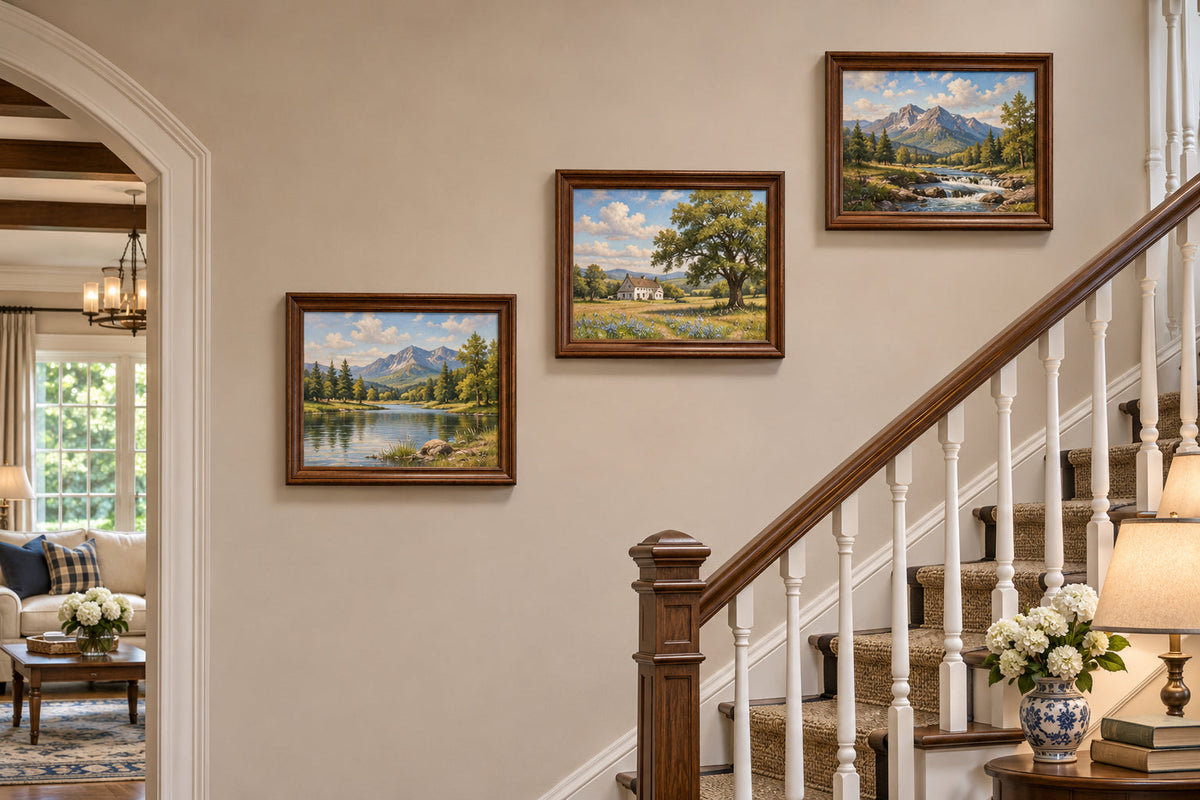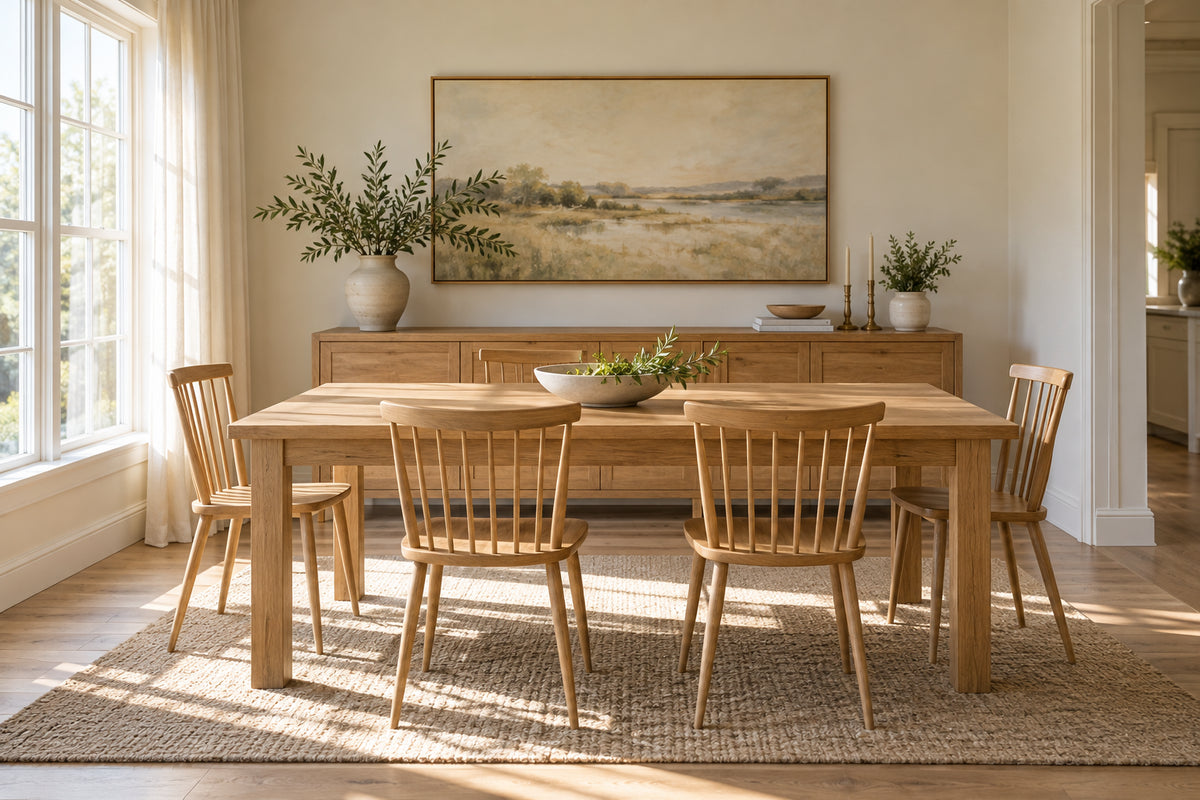
Dining room wall decor works best when it supports the way the room is used: sitting, talking, serving food, and moving around the table. Start with the wall you notice from the dining seats, choose a clear focal point, and check the arrangement with chairs pulled out as well as tucked in.
You do not need artwork on every wall. A single picture, a coordinated pair, or a small collection can give the dining area a sense of place without competing with the table and lighting.
Choose the Wall From the Seats, Not Just the Doorway
Walk into the room and notice the first view, then sit in the chairs you use most often. The best wall for a picture may be different from the wall that looks most prominent when you are standing.
Consider where people naturally look during a meal. An artwork directly behind one seat may be enjoyed mainly by the people opposite it. A side wall may be visible from several positions at once.
Also check the view from adjoining spaces. In an open-plan home, dining room art may be seen alongside living room shelves, kitchen cabinets, and a pendant light. Think about that whole view before adding another strong pattern.
Give the Table and Artwork a Clear Relationship
If your picture sits on a wall behind the dining table, judge it with the table in its everyday position. Centering the art on the entire wall can look awkward when the dining area occupies only part of that wall.
Choose the relationship deliberately. The display might anchor the dining zone, follow the table’s centerline, or relate more directly to a sideboard underneath it. There is no need to satisfy all three alignments if the furniture is not arranged that way.
Avoid changing the artwork position every time a chair moves. Use the stable elements of the room, such as the table, sideboard, or wall section, as your reference.
Use One Larger Piece for a Simple Focal Point
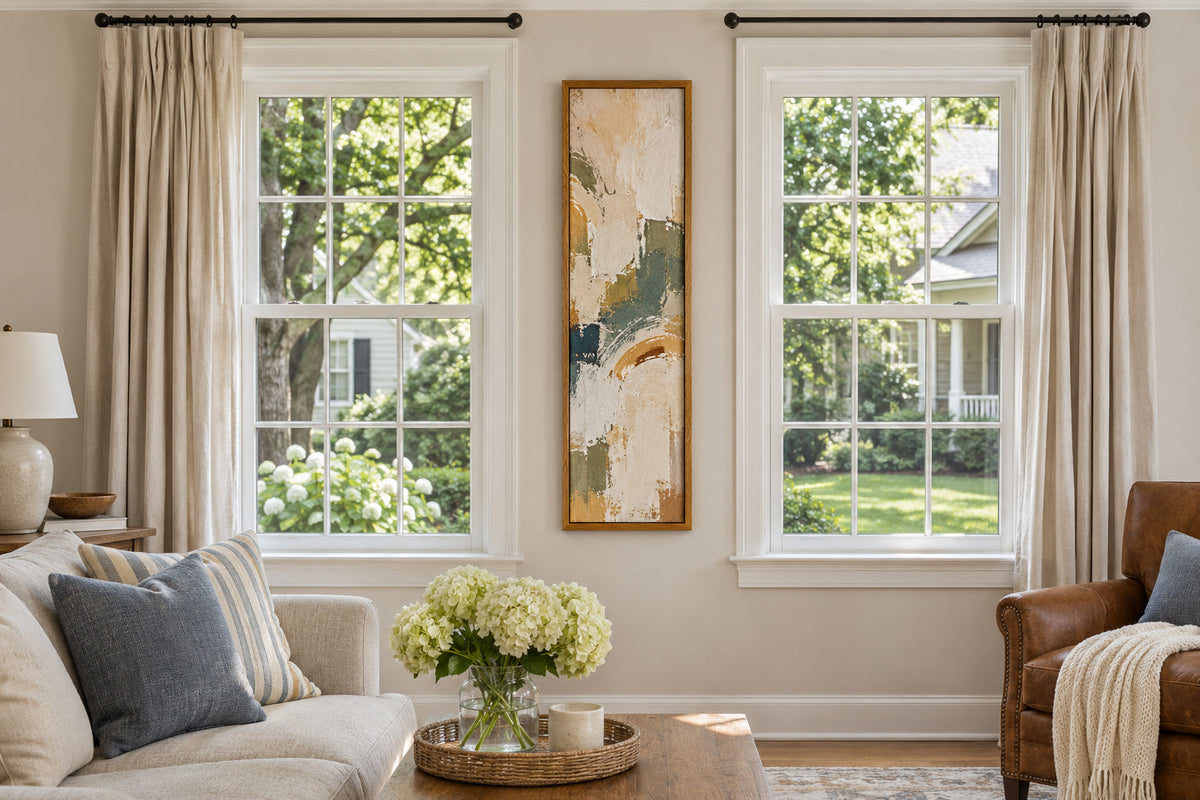
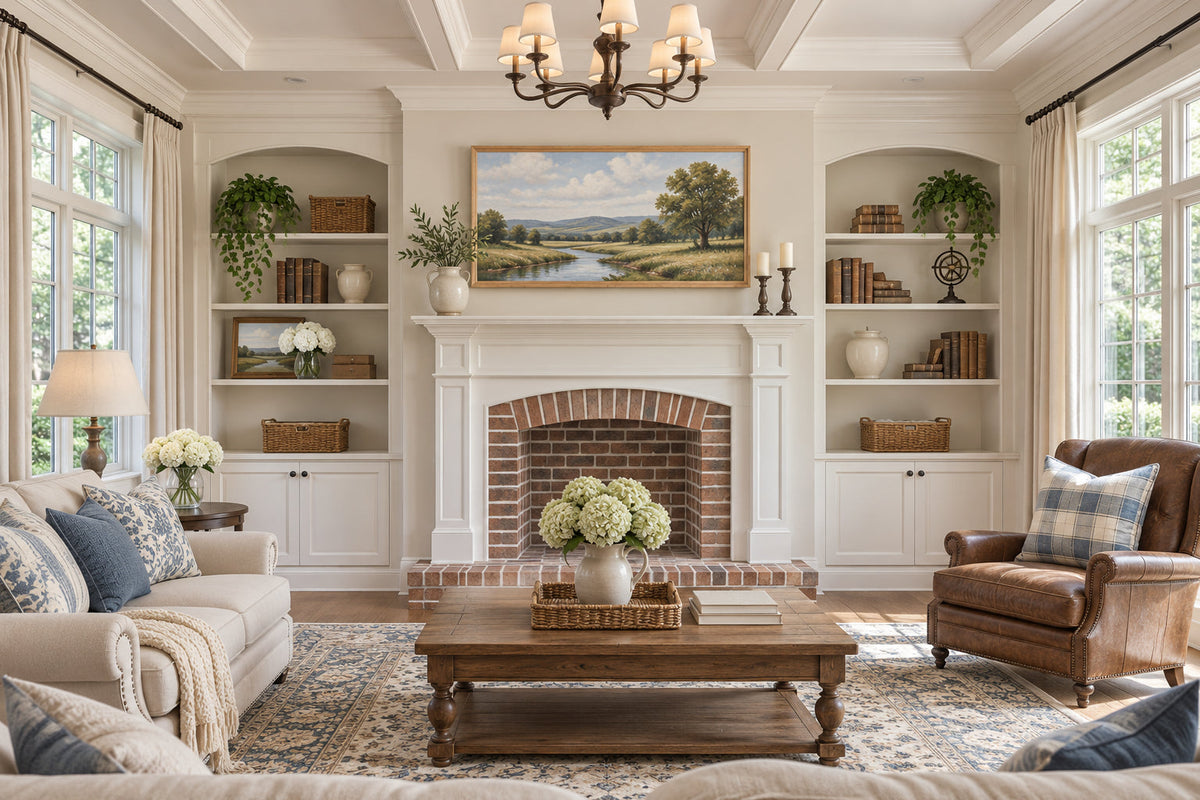
A single framed artwork can give a dining room a clear focus with relatively few visual edges. It can be useful when the room already includes patterned chairs, a detailed rug, or a distinctive light fixture.
Look for a subject you enjoy seeing repeatedly. Landscapes, abstract work, botanical images, and photography can all belong in a dining space. The room does not require a food theme simply because meals happen there.
Test the finished outside frame dimensions with paper before ordering. A print with a wide mat and substantial molding can occupy much more wall space than its image dimensions suggest.
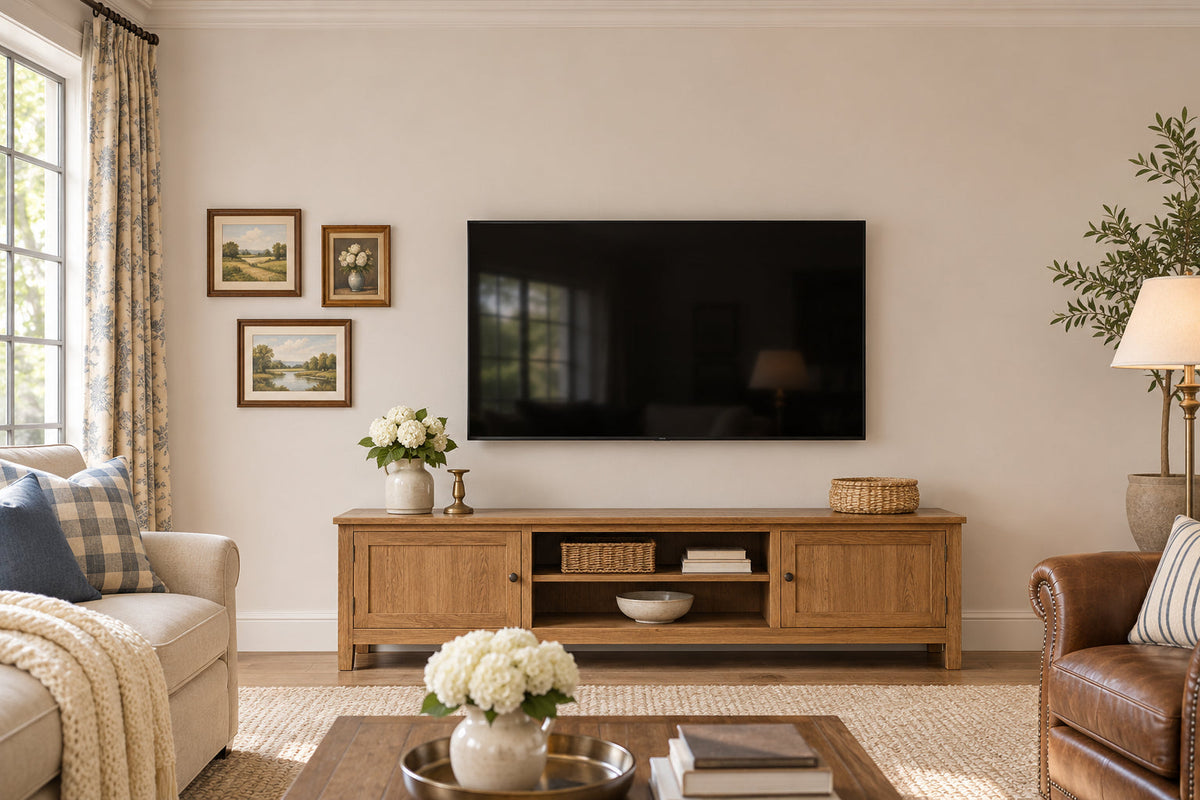
Try a Pair or Small Group Above a Sideboard
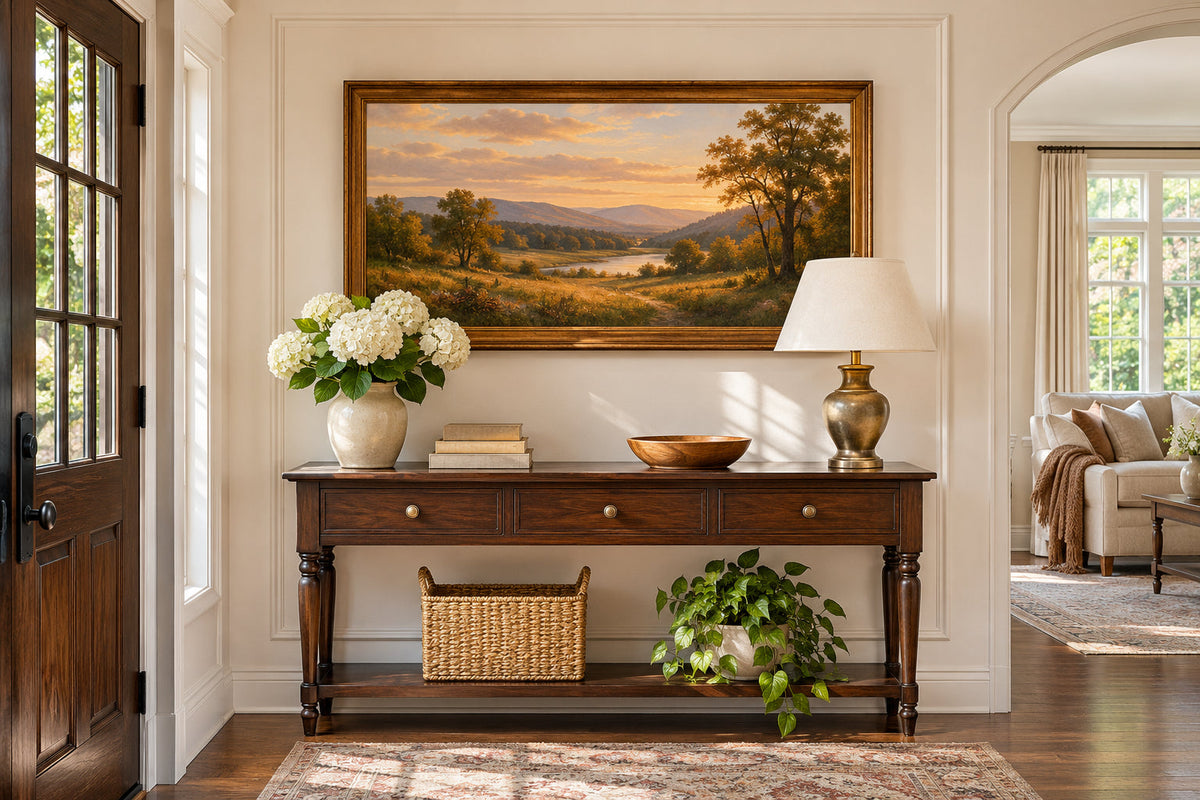
A sideboard provides a practical reference for a picture arrangement. Treat the frames and the gaps between them as one composition rather than centering each picture independently.
Consider the objects that normally sit below the artwork. Tall lamps, serving pieces, and vases may overlap the lower part of the display visually. Arrange those items before deciding whether the pictures need to move.
Leave the serving surface useful. If you regularly place platters on the sideboard, avoid a decorative setup that requires removing several objects at every meal. Wall art can carry some of the visual interest while the surface stays relatively clear.
Work With the Shape of a Breakfast Nook

In a compact dining corner, a narrow wall may suit a vertical pair of pictures. A wider section may work better with one horizontal artwork or a short row of smaller frames.
Use the actual wall area, including trim and windows, when judging the arrangement. Trying to continue a gallery around every corner can make a small nook feel busier than intended.
Keep pictures clear of places where chair backs, elbows, or an opening door could contact them during ordinary use. A display should fit the room when someone is seated, not only when the chairs are pushed in.
Connect Colors Without Matching the Entire Room
An artwork can repeat a small color from the rug, upholstery, or curtains without matching them exactly. A little connection is often enough to make the display feel considered.
If the dining furniture is dark, lighter artwork or mats may provide contrast. If the room is mostly pale wood and neutral fabrics, a black frame or a stronger image can define the wall.
Keep the picture itself part of the decision. Choosing art only because it matches the chair cushions can leave you with a coordinated room and an image you do not particularly enjoy.
Check Daylight, Evening Light, and Glare

Dining rooms often change character after sunset. A picture that looks clear in daylight may catch a reflection from a pendant or lamp once the lights are on.
Check the view from several seats at both times of day. Moving a lamp or making a small placement adjustment may improve the view. Follow care guidance for the artwork when choosing a location; avoiding visible glare alone does not establish that lighting conditions are suitable for the piece.
If a light fixture already dominates the room, keep the wall arrangement quieter while testing. The art and the lighting can complement one another without both demanding the same attention.
Preview the Display Before Installing Hardware
Make paper templates using each frame’s outside dimensions. Attach them temporarily with tape suitable for the wall finish, following the tape instructions and testing a hidden area first.
Sit down, pull out the chairs, and imagine serving a meal. Check the templates alongside the sideboard objects and any seasonal centerpiece you regularly use.
When the placement feels right, measure the actual support points on the frames. Use hanging hardware suitable for the framed weight and wall type, following the installation directions. The paper outline is a layout guide, not the location of the hook.
Frequently Asked Questions
Does dining room art need a food or kitchen theme?
No. Landscapes, abstract artwork, photographs, and botanical prints can all work. Choose a subject you enjoy and a presentation that fits the room.
Should artwork be centered on the wall or the dining table?
Choose the relationship that anchors the dining area most clearly. Depending on the layout, that may be the table, a sideboard, or a defined wall section rather than the entire wall.
Can I use several small pictures in a dining room?
Yes. Treat them as one grouping, repeat a visual element, and check the complete arrangement from the dining seats before hanging.
Start with the view from the table, choose a manageable arrangement, and leave room for everyday meals. A dining room can feel personal without every wall becoming a separate display.